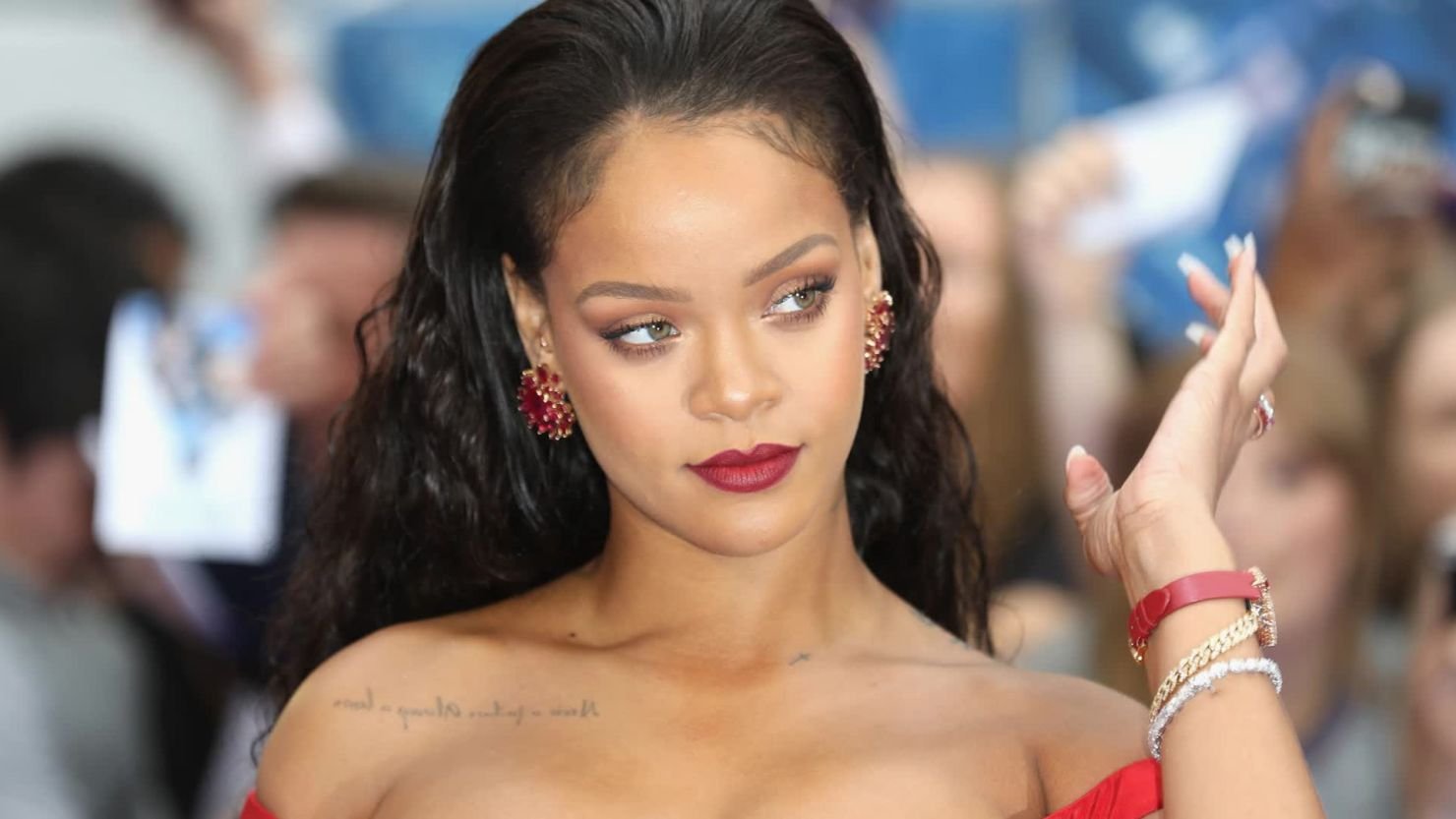
No rollout. No teaser. Just one reveal that instantly shifted the conversation around Rihanna — and it had nothing to do with music, fashion, or charts. Behind the headline is a project so ambitious it’s being called unprecedented — built for children who’ve lost everything, designed to give them something most never get back. What stunned fans most wasn’t the dollar figure… it was why she said she’s doing it — and the part of her own story she rarely speaks about. This isn’t a rebrand. It’s a legacy move. And one detail about where it’s happening — and who it’s for — is why people can’t stop talking.**
In a social media landscape where celebrity announcements are meticulously teased with cryptic posts and countdowns, Rihanna did the opposite. On a quiet January morning in 2026, the global superstar—Robyn Rihanna Fenty—dropped a single, unfiltered statement via her Clara Lionel Foundation’s channels and her personal Instagram: a commitment to launch an unprecedented initiative for children who have lost parents or guardians to disaster, conflict, or illness. No album drop, no Fenty Beauty campaign, no Savage x Fenty runway—just a raw pledge to build and fund a network of long-term residential care and education centers specifically for orphaned and displaced children in high-need regions of the Caribbean, East Africa, and underserved U.S. communities.
The project, internally dubbed “Legacy Homes” within the foundation, aims to create permanent, family-style living environments rather than temporary shelters. Each center will house small groups of children (10-15 per home) with dedicated caregivers, trauma-informed therapy, schooling, vocational training, and pathways to higher education or entrepreneurship. It’s designed to restore stability, belonging, and future prospects to kids who’ve “lost everything”—a phrase Rihanna used repeatedly in her statement. Estimates suggest an initial investment exceeding $50 million from her personal funds, Fenty brand proceeds, and foundation reserves, with plans for multi-year sustainability through partnerships.

What halted scrolls worldwide wasn’t the scale alone—though it’s being hailed as unprecedented for a celebrity-led effort in this niche—but the deeply personal motivation Rihanna revealed. She opened up about a rarely discussed chapter of her life: the profound impact of losing her grandmother Clara Braithwaite to cancer complications in 2011, the woman after whom the Clara Lionel Foundation is named. “My grandmother was my anchor,” Rihanna wrote. “When she was gone, I felt a piece of my world disappear. I can’t imagine what it’s like for a child to lose that anchor entirely—parents, home, security. I’ve built empires, but this is about rebuilding what breaks earliest: childhood.” The vulnerability struck a chord; Rihanna, who guards her private life fiercely, rarely delves into grief or family loss beyond surface mentions.
The “one detail” fueling endless conversation is the targeted focus: these homes will prioritize children orphaned or displaced in regions tied to Rihanna’s heritage and foundation’s footprint—starting in Barbados (her birthplace), expanding to other Caribbean islands affected by hurricanes and climate crises, East African communities hit by conflict and drought, and pockets of the U.S. South facing systemic inequities. Unlike broad disaster relief, this is long-term guardianship infrastructure—homes where kids grow up with continuity, not cycle through foster systems or camps. “It’s not aid that comes and goes,” Rihanna emphasized. “It’s roots replanted.”
Fans erupted. Hashtags like #RihannaLegacyHomes, #ForTheLostOnes, and #ClaraLionelLegacy trended globally within hours. Comments poured in: parents sharing stories of adoption or loss, survivors of Hurricane Dorian (which devastated the Bahamas in 2019) thanking her for past relief and now this deeper commitment, and admirers calling it “the most real thing she’s ever done.” Many noted the timing—amid her raising three young children (RZA, Riot, and Rocki) with A$AP Rocky—suggesting motherhood has amplified her empathy. “She’s not just donating; she’s building families for those without,” one viral post read.
This isn’t Rihanna’s first foray into children’s causes. The Believe Foundation, launched at 18 in 2006, focused on terminally ill kids. The Clara Lionel Foundation, established in 2012 after her grandmother’s passing, has poured millions into education (over $5 million for global scholarships), disaster response (Hurricane Dorian aid, COVID-19 ventilators), climate resilience, and health equity. Recent efforts include partnerships for climate solutions, women’s entrepreneurship in under-invested areas, and Caribbean arts via the Mellon Foundation. But Legacy Homes marks a shift: from emergency aid and scholarships to permanent, community-rooted transformation for the most vulnerable orphans.
Critics and observers call it a model for modern celebrity philanthropy—direct, personal, and legacy-driven rather than performative. The foundation’s “refresh” in recent years emphasized community-led innovation, hiring local leaders, and long-term investment over one-off checks. Rihanna’s statement tied it all together: “I’ve been blessed beyond measure. Now it’s time to give back what money can’t buy—stability, love, a future—for kids who remind me of the girl I was when I lost my anchor.”
As conversations swirl, the project underscores Rihanna’s evolution. No longer defined solely by hits like “Umbrella” or business empires like Fenty Beauty and Savage x Fenty, she’s crafting a legacy of quiet, structural change. In a world quick to scroll past headlines, this one paused millions—not for glamour, but for humanity. And in revealing her own scars to heal others’, Rihanna proved some announcements don’t need teasers; they need truth.