Jaguar Wright Sparks Uproar After Claiming A-List Superstars Appear in the Epstein Files — A List That Left Hollywood “Stunned”
The names everyone is whispering about are no longer confined to private group chats and late-night speculation.
They are being spoken aloud — carefully, deliberately — and the echoes are growing louder.
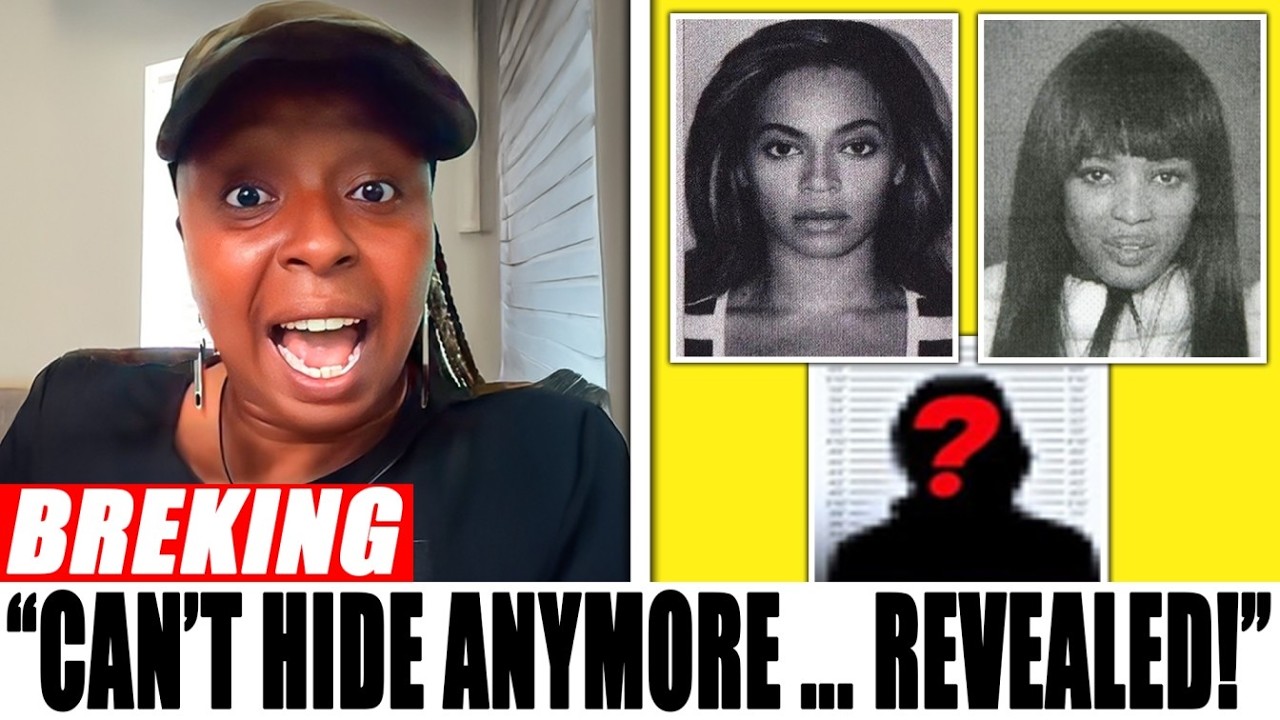
In a recent appearance that quickly ignited social media, Jaguar Wright once again positioned herself at the center of a controversy many believed had settled into legal archives and sealed documents.
This time, however, the reaction feels different.
The temperature is higher.
The stakes appear steeper.
And the questions are multiplying faster than the answers.
For years, the case surrounding Jeffrey Epstein has hovered over the worlds of finance, politics, academia, and entertainment like a storm cloud that never fully moves on.
Court documents have been unsealed in phases.
Civil suits have surfaced.
Names have appeared in filings — some clarified, some contextualized, some fiercely denied.
Yet the public appetite for clarity has never been satisfied.
Instead, each new document drop has fueled a cycle of speculation that seems impossible to extinguish.
Wright’s latest remarks stepped directly into that volatile atmosphere.
Speaking with a tone that blended certainty and defiance, she suggested that certain individuals referenced within the broader Epstein document landscape are not obscure figures or peripheral contacts.
According to her framing, they are household names — personalities who have dominated award shows, political stages, magazine covers, and global broadcasts.
She stopped short of presenting documentary evidence during the appearance, but the implication was unmistakable: the people allegedly mentioned are not anonymous elites hidden in shadows, but familiar faces woven into mainstream culture.
Within minutes, clips of her statements spread across platforms.
Supporters applauded what they described as courage — a willingness to say aloud what many claim has been suppressed.
Critics questioned the sourcing, the context, and the potential harm of amplifying claims without documented backing.
Others pointed out that appearing in documents connected to Epstein does not automatically imply wrongdoing, a distinction that has repeatedly surfaced in legal analyses of prior releases.
Still, nuance rarely travels as quickly as shock.
The renewed attention arrives at a moment when public trust in institutions — from media to politics to entertainment — remains fragile.
The Epstein saga itself has become shorthand for a deeper suspicion: that influence can shield reputations, that power can delay consequences, that truth can become tangled in legal technicalities.
Each new wave of commentary reopens that wound.
Wright has long cultivated a reputation for outspoken commentary about the entertainment industry.
Over the years, she has made claims about systemic exploitation, backroom dealings, and moral compromises at high levels of fame.
Some of her allegations have been dismissed outright; others have fueled online investigations and reaction videos dissecting every word.
To her supporters, she is a whistleblower navigating a hostile industry.
To detractors, she is a provocateur leveraging controversy.
The divide is sharp — and growing sharper.
What makes this latest moment different is not simply the name Epstein, but the suggestion that the story is not finished.
Legal experts familiar with prior unsealed documents have repeatedly emphasized that being named in a deposition or flight log does not constitute evidence of criminal behavior.
The legal threshold for implication is far higher than the threshold for public suspicion.
Yet in the court of public opinion, proximity alone can be enough to trigger irreversible reputational damage.
That tension — between documented fact and insinuation — is where the current debate now lives.
Online forums have begun compiling lists, cross-referencing past releases, revisiting old photographs, and resurfacing decade-old interviews.
Some posts frame the moment as an overdue reckoning.
Others warn of digital vigilantism spiraling beyond evidence.
The algorithm does not differentiate between verified filings and speculative threads; both travel at the same speed once engagement spikes.
Meanwhile, representatives for several high-profile figures previously mentioned in various Epstein-related contexts have, in past instances, firmly denied wrongdoing and clarified the limited nature of their interactions.
Those statements are once again circulating, reposted alongside new commentary, as if history is looping in real time.
Behind the spectacle lies a more complex legal reality.
The Epstein case spawned multiple investigations, civil suits, and related prosecutions.
It also left unanswered questions following Epstein’s death in 2019 while awaiting trial.
Conspiracy theories flourished in the vacuum, blending confirmed facts with unverified narratives.
In that landscape, even cautious commentary can become combustible.
Wright’s remarks did not include newly released court exhibits or authenticated lists presented on screen.
Instead, they operated in a realm of assertion — strong, confident, and suggestive.
That distinction matters legally, but emotionally it may not.
For audiences primed to distrust official narratives, the mere suggestion that recognizable celebrities appear within document troves is enough to reignite outrage.
There is also a cultural undercurrent shaping the reaction.
In recent years, movements exposing abuse and misconduct have reshaped entire industries.
High-profile convictions and career collapses have proven that once-untouchable figures can, in fact, face consequences.
Against that backdrop, any hint that additional revelations remain hidden carries amplified weight.
And yet, the line between accountability and accusation without substantiation remains perilously thin.
Media analysts observing the latest wave note how rapidly language shifts from “mentioned” to “involved” in online discourse.
The transformation can occur in a single repost.
Legal filings use precise phrasing; social media compresses it into emotional shorthand.
By the time clarification arrives, the narrative may already be cemented.
Still, curiosity persists.

What exactly is in the remaining sealed material, if any? Are there contexts misunderstood by the public? Could future releases, if they occur, clarify more than they inflame? Or will ambiguity continue to fuel cycles of outrage that never fully resolve?
Wright has not signaled retreat.
If anything, the attention appears to have reinforced her stance.
Interviews dissect her tone, her timing, her motivations.
Some observers speculate about strategic positioning — whether she is leveraging momentum or responding to behind-the-scenes developments unknown to the public.
Others argue that even if her claims prove exaggerated, the broader demand for transparency will not fade.
In Hollywood and political corridors alike, silence can speak volumes.
Few high-profile individuals have directly responded to Wright’s most recent remarks, perhaps wary of amplifying them further.
Public relations strategy often favors restraint in the face of unverified claims.
But silence, too, can be interpreted — sometimes unfairly — as confirmation.
The broader Epstein narrative has always been layered: documented crimes, powerful connections, legal settlements, investigative journalism, sealed records, and public suspicion intertwining into a story that refuses to close.
Each new voice reopens it from a slightly different angle.

For now, no official new document release has accompanied Wright’s statements.
There has been no court filing attached to her appearance that alters the established legal record.
What exists is reaction — intense, polarized, relentless.
And perhaps that is the point.
In an era when information moves faster than verification, when reputations can pivot in hours, when outrage is currency, even a suggestion can detonate.
Whether this moment evolves into substantiated revelation or fades into another cycle of online controversy remains uncertain.
But one thing is clear: the Epstein shadow has not disappeared.
It lingers, reshaped by each new allegation, reframed by each new commentator willing to step into its orbit.
As audiences scroll, speculate, and debate, a familiar tension returns — the uneasy space between what is proven and what is implied.
It is in that space that careers tremble, narratives twist, and public trust is tested yet again.
And until definitive clarity emerges, if it ever does, the question hanging in the air will not simply be who was named.
It will be whether the truth — in all its documented, contextualized, and legally verified form — can ever move as quickly as the rumor.