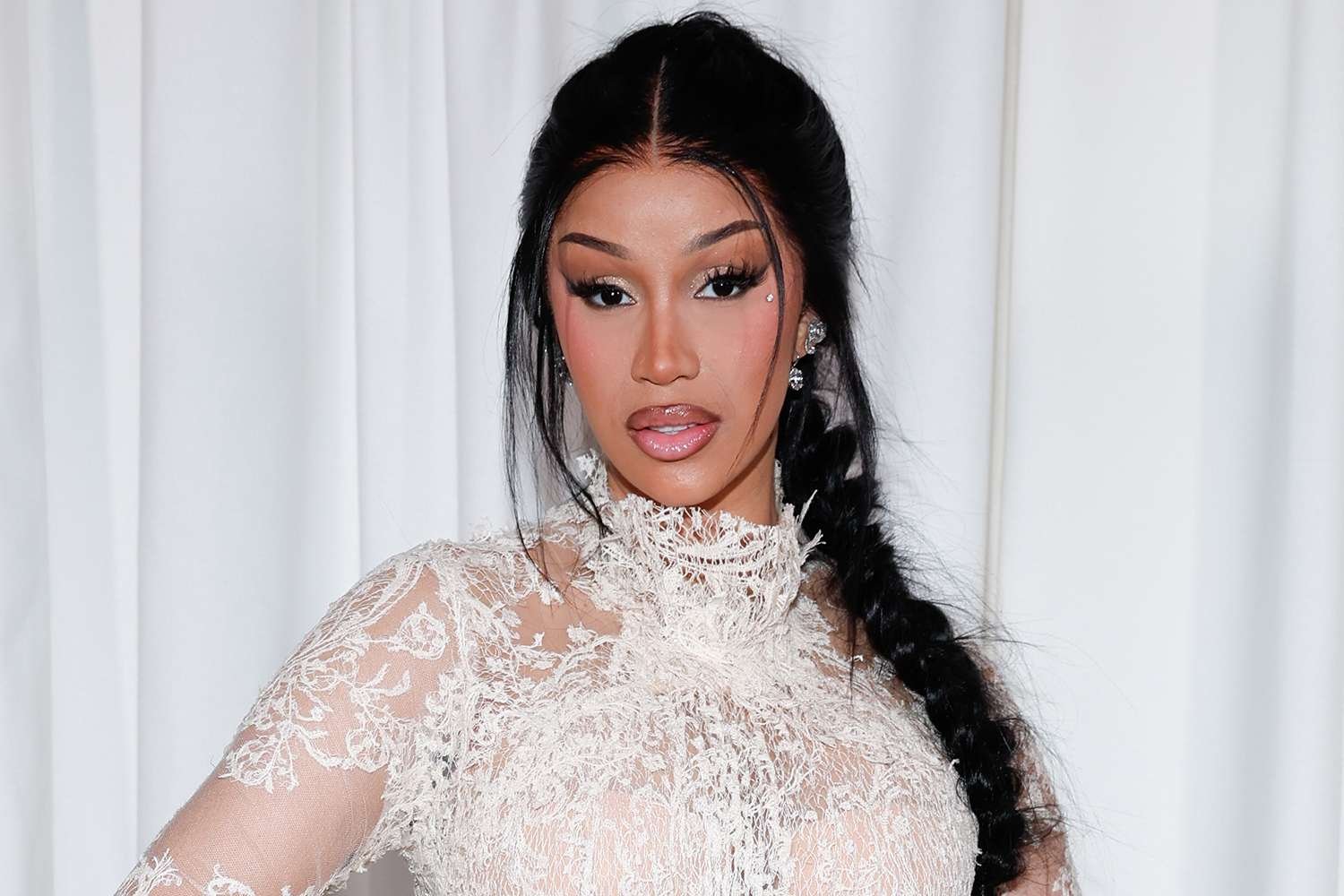

Rapper Cardi B has repeatedly spoken out about her dislike of Donald Trump, but now the Grammy-winning rapper is beefing with the Department of Homeland Security over Jeffrey Epstein’s files.
It all started with her Wednesday night concert in Palm Desert, Calif., as part of her “Little Miss Drama Tour.” Cardi B sounded off on any potential ICE federal agents that may have been at the concert.
“As long as she doesn’t drug and rob our agents, we’ll consider that an improvement over her past behavior,” Department of Homeland Security posted. The reply was a reference to Cardi B’s comments years ago about how she allegedly would drug and rob men in hotels when she worked as a stripper. In 2019, she said “whether or not they were poor choices at the time, I did what I had to do to survive” and “I never claimed to be perfect or come from a perfect world.”
Cardi B fired back at the Department of Homeland Security by replying, “If we talking about drugs let’s talk about Epstein and friends drugging underage girls to rape them. Why y’all don’t wanna talk about the Epstein files?”
Since the Department of Justice unveiled more than three million more files of sex trafficker Jeffrey Epstein in recent weeks, several celebrities, politicians and major public figures have had to answer for their past ties with him. Trump is named more than 5,300 times in the Epstein files, according to the New York Times, but he’s denied any wrongdoing and has so far not faced any consequences.
In the music world, Wasserman Group founder Casey Wasserman is facing backlash over his past ties to Ghislaine Maxwell, Epstein’s associate who was sentenced to 20 years in prison for sex trafficking. Chappell Roan, Orville Peck and more artists have left Wasserman Group and called for the CEO to step down from the company.
A heated public clash has erupted between Cardi B and the Department of Homeland Security (DHS), drawing national attention to the ongoing political tensions surrounding immigration enforcement, free speech, and past controversies involving public figures. The exchange, which unfolded both on stage and online, underscores how quickly entertainment, politics, and social media can collide in today’s hyper-connected climate.
The controversy began during a recent concert, where Cardi B reportedly addressed the presence and actions of Immigration and Customs Enforcement (ICE). Known for her outspoken personality and unfiltered commentary, the Grammy-winning rapper did not mince words. According to widely circulated clips, she told the crowd that if ICE agents entered the venue, she and her team would confront them. She also claimed she had bear mace backstage and declared that authorities would not be taking her fans.
Her remarks were clearly intended to energize her audience and signal solidarity with immigrant communities who have expressed fear over enforcement raids. However, critics quickly accused her of promoting violence against federal officers. Supporters, on the other hand, argued that her statements were rhetorical and reflective of broader frustrations over immigration policy.
The situation escalated when the official DHS account on X responded publicly. In a post that many interpreted as sarcastic, the agency wrote that as long as Cardi B did not “drug and rob” its agents, it would consider that an improvement over her past behavior. The comment referenced admissions Cardi B made years earlier, when she said that before her music career took off, she had drugged and robbed men while working as a stripper. At the time, she defended her actions as a product of desperation and survival in difficult circumstances, though the remarks sparked backlash and debate.
The federal agency’s decision to invoke that history marked a striking moment: a government body engaging in pointed social media commentary about a celebrity’s past misconduct. Critics of DHS described the post as unprofessional and inflammatory, arguing that it lowered the tone of public discourse. Others defended it as a legitimate response to rhetoric they viewed as threatening toward law enforcement personnel.
Rather than retreat, Cardi B doubled down. She fired back online by invoking the case of Jeffrey Epstein, the financier whose crimes and connections to powerful figures have fueled years of public outrage and conspiracy theories. In her response, she questioned why officials were willing to joke about her past but, in her view, less eager to address the so-called “Epstein files” and allegations involving underage girls who were drugged and abused.
Her pivot to Epstein shifted the narrative from immigration enforcement to broader issues of elite accountability and systemic injustice. By drawing that comparison, she framed the DHS comment as hypocritical, suggesting that authorities focus on shaming her rather than confronting more serious crimes tied to influential individuals.
The episode has reignited debates about the role of celebrities in political activism. Cardi B has long positioned herself as a voice for marginalized communities, often speaking on issues ranging from economic inequality to policing. She previously interviewed lawmakers and publicly criticized policies enacted during the administration of Donald Trump, particularly those related to immigration and border security.
For her supporters, her comments at the concert were consistent with that record of advocacy. They argue that artists have historically used their platforms to challenge authority and stand up for vulnerable groups. From protest songs during the civil rights movement to modern social media campaigns, entertainers have often blurred the line between performance and political expression.
Detractors, however, contend that there is a difference between advocacy and language that appears to endorse confrontation with federal agents. Some legal analysts noted that while rhetorical hyperbole is protected speech under the First Amendment, direct incitement to violence can cross constitutional boundaries. Whether Cardi B’s remarks would meet that threshold is debatable, but the controversy illustrates how quickly strong language can spark serious scrutiny.
The federal government’s involvement also raises questions about institutional communication strategies. Social media has become a primary tool for agencies to share information and respond to public criticism. Yet when official accounts adopt a combative tone, it can blur the distinction between governance and online sparring. Critics of the DHS response argue that agencies tasked with national security should maintain professionalism rather than engage in public taunts. Supporters counter that public figures who criticize federal operations should expect equally direct replies.
Meanwhile, the reference to Epstein taps into a deep well of public distrust. The financier’s 2019 death in federal custody, officially ruled a suicide, generated intense speculation and bipartisan calls for transparency. Court documents and investigative reports have revealed a network of associations with politicians, business leaders, and celebrities. Although many of those named have denied wrongdoing, the case continues to symbolize, for some Americans, a belief that powerful individuals evade accountability.
By invoking that case, Cardi B connected her dispute with DHS to a broader narrative of selective outrage. Her message suggested that the government’s willingness to spotlight her past misdeeds contrasts with what she perceives as insufficient transparency around elite misconduct. Whether one agrees with that framing or not, it resonated strongly with segments of the public who already harbor skepticism toward institutions.
The broader political backdrop adds further complexity. Immigration remains one of the most polarizing issues in American politics. ICE, in particular, has been a lightning rod for protests, with activists accusing the agency of harsh enforcement tactics and family separations. Supporters of the agency argue that it enforces laws passed by Congress and plays a critical role in national security.
In this charged environment, even off-the-cuff remarks at a concert can ignite national controversy. Social media amplifies such moments instantly, allowing clips to circulate far beyond the original audience. Official responses can likewise go viral within minutes, fueling cycles of outrage and counter-outrage.
Ultimately, the clash between Cardi B and DHS highlights the evolving nature of public discourse. Celebrities are no longer confined to entertainment; they are political actors with vast followings. Government agencies are no longer limited to press releases; they participate directly in online debates. The result is a public square where cultural and political battles unfold in real time, often with sharp edges and little restraint.
Whether this episode will have lasting consequences remains unclear. It may fade as another fleeting headline in an era of constant controversy. Yet it also serves as a case study in how power, celebrity, and digital communication intersect—revealing both the potential and the perils of speaking loudly in a divided nation.