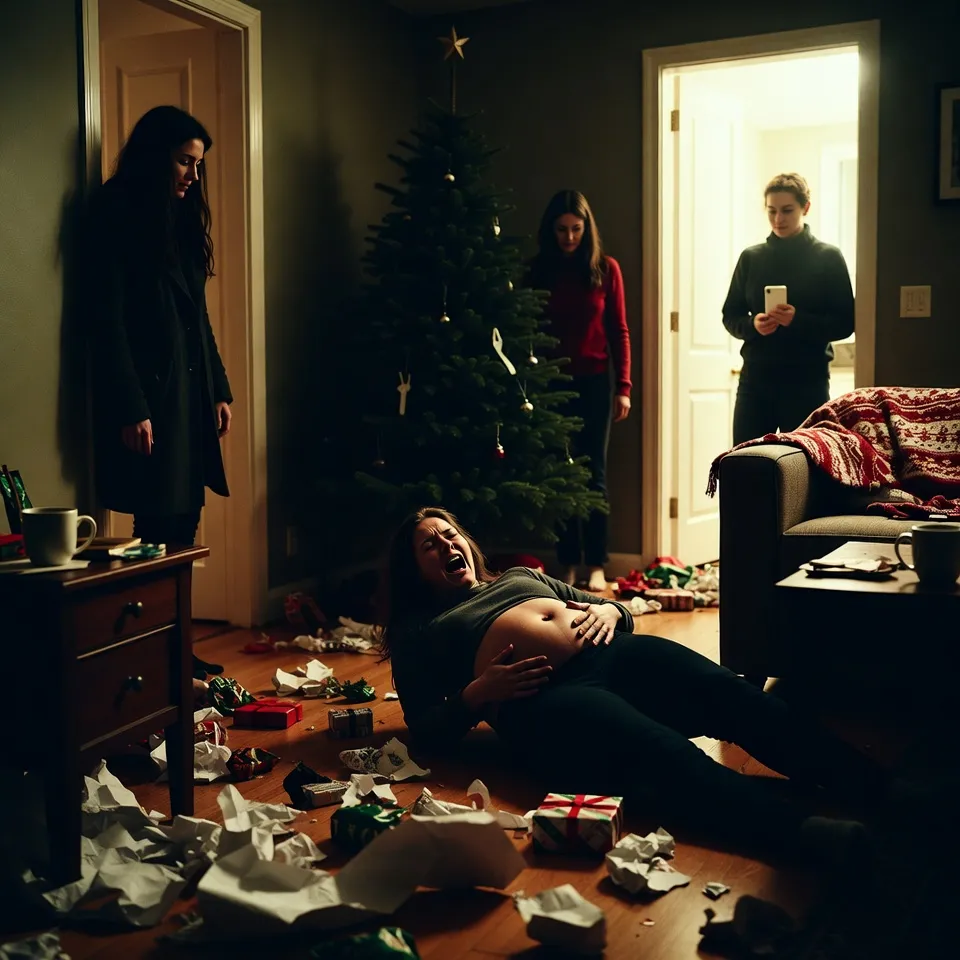
“Mom… please… I’m about to give birth.” I clutched the edge of the sofa, sweat soaking my dress, heart racing, unable to breathe, the contractions coming with relentless, punishing force.
My mother, Linda, glanced at her watch with irritation, not standing. “It’s your sister’s birthday party today,” she said flatly. “Call an Uber. I don’t have time for this nonsense.”

Across the room, Emily adjusted her makeup in front of the mirror, laughing. “I’m the star today. Don’t ruin it with your drama. I’ve planned this party for weeks, Mom knows.”
Drama. My body shook violently as another contraction hit. Nine months pregnant, alone, and terrified. Daniel was overseas, unreachable. I had begged Mom to stay, and she had promised. Now she left.
I whispered desperately, tears streaming down my face, “Mom, please… I can’t stand. Something feels wrong. I feel dizzy, my back hurts. You promised, please help me. Don’t leave me alone.”
Her sigh was exasperated, loud. “You’re exaggerating again. Women give birth every day. Call a car.” She grabbed her purse, leaving me trembling. The door slammed behind her, laughter fading into silence.
I tried to reach my phone, but another contraction knocked me off my feet. I collapsed onto the floor, darkness creeping into my vision, and panic constricting my chest, suffocating my ability to think.
The pain was blinding. I screamed, but no one came. The world narrowed to my body, my baby, and the unbearable agony surging through me like relentless waves of fire and terror.
I remember thinking: This cannot happen like this. Alone, abandoned. My baby’s life depends on me. I tried to crawl, to call for help, but each movement felt impossible, each breath razor-sharp.
May you like




A neighbor later told me they heard my screams. Emergency services arrived minutes later, but those minutes were an eternity. My body was spent, trembling uncontrollably, and my mind barely clinging to reality.
When I woke, bright lights seared my eyes. Machines beeped around me. A nurse hovered urgently, calling my name, her face tight with worry. I tried to move, panic clawing at my chest.

“You’re in the hospital,” she said. “You lost consciousness at home. A neighbor heard your screams. Emergency services brought you here immediately. You need to rest. Your baby is alive but fragile.”
“My baby?” I whispered, voice trembling. My heart thumped violently. My body still ached, my mind fuzzy, yet the fear for my son eclipsed everything. “Is he okay? Is he alive?”
The nurse hesitated, a shadow crossing her expression. “He’s alive,” she said carefully. “But there were complications. He’s in the NICU. Premature. We’re monitoring him closely. He needs constant care and attention to survive.”
Tears streamed down my face as relief and terror collided. Alive. My baby is alive. But fragile, fighting for each breath, connected to machines that beep and whir, measuring every small movement, every heartbeat.
Days passed in a haze. I visited him constantly, holding his tiny hand when permitted, speaking softly. The NICU was cold and clinical, filled with other parents’ anxiety, love, and desperate hope.
My mother and sister arrived one afternoon, balloons and flowers in hand, smiles plastered on their faces as though visiting a hospital was a social event, not a critical, terrifying reality.
The moment they saw the incubator, their expressions froze. Horror replaced joy. My mother gasped, Emily’s hands shook. The baby, so tiny, struggling with every breath, changed everything. Laughter and parties seemed absurd now.
“Wh-what’s happening?” my mother stammered, voice shaking. She couldn’t comprehend the fragility before her, the reality of neglect finally confronting her. I wanted to shout, to demand accountability, but exhaustion held me silent.
“I told you I wasn’t exaggerating,” I said quietly. My voice trembled with anger and grief. Nine months of anticipation, fear, and loneliness culminated in this moment. My pain ignored, my life nearly lost.
Emily’s gaze fell to the floor, shame in her eyes, a flicker of guilt replacing her usual arrogance. She had mocked me, disregarded me, yet now faced the consequences of indifference, helpless to fix them.
They stood there, frozen. The party, the balloons, the frivolous laughter—none of it mattered. Reality was merciless, teaching a lesson of empathy and accountability they had never learned, showing them life’s brutal edge.
Every day I sat by the incubator, holding his tiny hand, talking softly. He was small, fragile, yet alive. Every movement, every tiny breath, a victory. Every parent’s instinct amplified a thousandfold.

My mother hovered awkwardly, unsure how to act. Words failed her. Her presence, once casual and dismissive, now felt heavy with guilt and fear. Emily avoided my eyes, ashamed, uncomfortable with the reality of consequence.
I realized then that family could fail. They could ignore, mock, and abandon. Yet, life demanded resilience, courage, and determination. My son depended on me, and I had no choice but to rise.
Nurses and doctors became my allies, guiding, supporting, teaching me. The NICU was a world of vigilance, monitors, and careful observation. I learned quickly, every day a lesson in survival and hope.
Every night, I held him close when permitted, whispering reassurances he couldn’t understand. I cried silently, overwhelmed with relief, fear, and love. The tiny life in my arms was miraculous, miraculous and fragile.
The hospital corridor echoed with footsteps, alarms, and other parents’ cries. Each story intertwined with mine, a tapestry of love, terror, and resilience. The world felt simultaneously enormous and constricted, defined by tiny incubators.
Weeks passed. He grew stronger, feeding better, breathing more steadily. Each small victory became monumental. I celebrated quietly, savoring moments others might overlook, understanding life’s fragility and the triumph inherent in survival.
Mom and Emily visited often, tentative, guilt-ridden. Their earlier laughter gone, replaced by quiet apologies and hesitant questions. Actions cannot undo neglect, but presence, though belated, began to matter in small increments.

They learned, slowly. Watching a tiny human fight for life humbled them. They saw the cost of indifference, the value of vigilance. I hoped they internalized this lesson, though forgiveness remained complex, fragile.
I reflected on the labor, on the collapse at home, on the betrayal and abandonment. Every memory burned sharply, a warning and a catalyst, shaping the mother I needed to become, fierce and protective.
Daniel returned shortly after. His eyes were wide with shock at the hospital, but he stayed by my side, tender, loving, supportive, the partner I needed, helping me navigate a terrifying, fragile world.
Together, we watched our son fight and grow. Every day brought hope, every milestone a miracle. The world outside the NICU seemed distant, irrelevant. Life was measured in ounces, breaths, and heartbeats now.
By the time he was discharged, tiny but thriving, we had learned resilience, the value of care, and the fragility of trust. Our son, the center of our universe, had survived, defiant and strong.
Mom and Emily, forever changed, now understood the weight of neglect. Actions, consequences, and tiny lives could not be ignored. The party was meaningless; the truth was unavoidable, raw, and unforgettable.

I held my son, feeling life’s full intensity. The fear, the relief, the love—all converged in that moment. My family would never forget this lesson, nor would I forgive neglect so easily.
Recovery was slow. Emotional scars lingered alongside physical healing. I processed the trauma while cherishing every small moment with my son. I learned patience, empathy, and the staggering responsibility of life itself.
Even as my son grew healthy and strong, I remembered that day, the neglect, the abandonment. It fueled my determination to protect him, to ensure his life would never hinge on indifference again.
By the time he smiled, cooed, and reached milestones, I felt a profound shift within myself. I had endured pain, fear, and helplessness, emerging stronger, wiser, and unbreakably devoted to the life I nurtured.
My family had been confronted with the stark reality of consequences. My mother and sister were forever altered. I watched them learn accountability, and I silently vowed to never repeat past mistakes.
As I looked at my son sleeping peacefully, his tiny chest rising and falling steadily, I understood the magnitude of survival. Love, vigilance, and care had saved him. Indifference nearly destroyed him.
I whispered promises to him, soft words he couldn’t understand yet, but he felt. I vowed to protect, to nurture, to never let negligence threaten his fragile existence. I was his constant now.
Life after trauma was fragile, but beautiful. Every day we thrived, each moment precious. The terror, the near-loss, and the abandonment faded into lessons, shaping resilience, vigilance, and the fierce protection a mother would never relinquish.