“That’s God Looking Back at You” — The American Idol Audition That Silenced the Room and Turned a Song Into a Lifeline

The American Idol 2026 stage has seen countless dreamers, powerful voices, and emotional backstories. But on this night, something different settled over the room — something quieter, heavier, and impossible to shake.
A 15-year-old girl stepped into the spotlight.
Her name was Khloe Grace. No flashy entrance. No bravado. Just a nervous smile, a handwritten song, and a story that would leave judges, audience members, and viewers across the country struggling to hold back tears.
Khloe explained that she had written an original song — not for herself, and not to win a competition — but for Aubreigh Wyatt, a 13-year-old girl who died by suicide in 2023 after enduring relentless social media bullying.
They had never met.
They never would.
Khloe spoke softly as she shared her motivation. She, too, had felt the crushing weight of online cruelty. The comments. The pressure. The moments of isolation that make young people feel invisible. When she learned about Aubreigh’s story, something shifted.
“I wrote the song for her,” Khloe said. “For the things I wish someone had told her.”
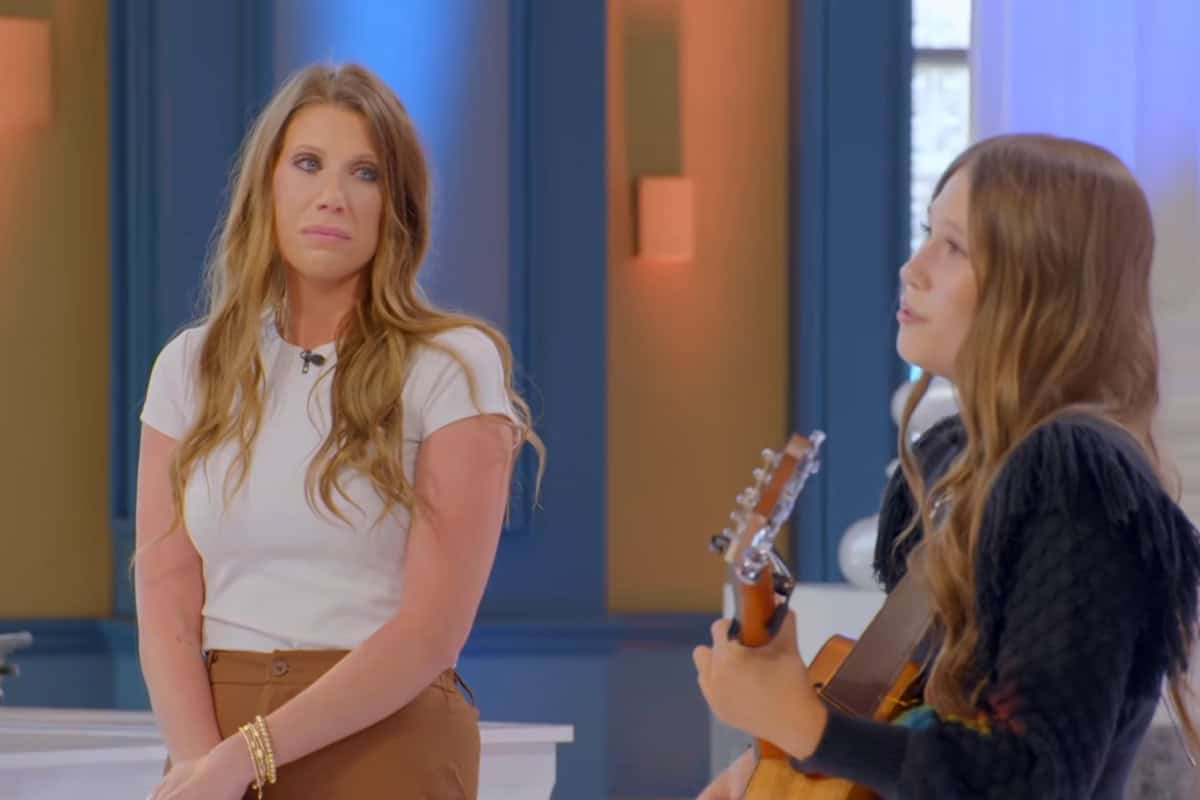
Before Khloe began to sing, the camera cut to a woman seated quietly among the audience. Heather Wyatt, Aubreigh’s mother, had been invited to the audition — and this was the first time she was meeting Khloe in person. She had no idea what the song would sound like. Only who it was for.
As the first notes filled the room, the atmosphere changed instantly.
There was no vocal acrobatics. No showmanship. Just a young voice, trembling but steady, carrying lyrics about being seen, being heard, and believing that your life still matters when the world feels unbearably loud and cruel.
Khloe didn’t sing about death.
She sang about staying.
As the song reached its final moments, the camera captured Heather covering her mouth, tears streaming freely. It wasn’t just grief — it was recognition. A stranger’s voice offering comfort where silence once lived.
The room rose to its feet, not in explosive applause, but in reverent stillness.
Lionel Richie was the first to speak. His voice cracked as he addressed Khloe directly.
“You have no idea,” he said slowly, “but when you were singing that song… that’s God looking back at you.”
No one commented on pitch or technique. There was nothing to critique. The audition had transcended the competition. It had become a vigil. A reckoning. A reminder of what music is meant to do.
Within minutes of the episode airing, social media lit up — not with judgment, but with reflection. Parents promised to listen more closely. Young viewers shared that they finally felt understood. Teachers, counselors, and mental health advocates urged others to watch and talk.
Khloe Grace didn’t just advance to the next round of American Idol.
She carried forward a conversation the country still struggles to have — about bullying, silence, and the cost of not taking pain seriously enough, soon enough.
Sometimes, a song isn’t written to win a title.
Sometimes, it’s written to reach the people who are still here — and remind them to stay.