The Resonance of Resilience: When Jamal Roberts and Neil Diamond Orchestrated a Miracle of the Soul
The air inside the historic theatre was not merely thick with expectation; it felt weighted with a collective, bated breath, as if the very walls understood the impossible gravity of the moment about to unfold.
For years, Jamal Roberts had existed in a self-imposed exile from the stage, a silence dictated by a diagnosis that had cruelly traded his signature high-octane steadiness for the tremors of a body in conflict with itself.
Yet, as the house lights dimmed to a warm, amber glow and the familiar, weathered silhouette of 84-year-old Neil Diamond took his place at the grand piano, the atmosphere shifted from mere curiosity to a kind of holy silence.
This was not a polished comeback or a manufactured media event; it was a high-stakes “Trustfall” into the power of human connection.
When Jamal finally stepped into the solitary pool of the spotlight, he wasn’t just a singer returning to his craft; he was a living testament to the “Reason to Fight,” standing before an audience that had waited through years of darkness to hear a voice they feared was lost forever.
The sight of Jamal Roberts standing vulnerable before a silent house marked a definitive shift from the era of performance-as-spectacle to a new, raw era of performance-as-survival.
For a man who had built a “fearless legacy” on his ability to command stadiums with a thunderous roar, the “soft and shaky” nature of his initial notes felt like a radical act of honesty.
He did not attempt to hide the physical toll his journey had taken; instead, he leaned into the frailty, allowing the thinness of his tone to act as a bridge to an audience that has its own unhealed wounds.
This wasn’t the Jamal Roberts of the “high-octane” radio hits, but a man delivering a “hard-earned truth” that could only be forged in the fire of a long-term medical battle.
By choosing to let the world see the “shaky” reality of his recovery, he transformed the stage into a sanctuary of authenticity, proving that true harmony is often found in the notes that are hardest to reach.
Neil Diamond’s presence at the piano served as the emotional and musical anchor for the evening, providing a “Circle of Hope” that allowed the younger artist to navigate the treacherous waters of his own return.
At eighty-four, Diamond carries his own history of physical challenge with a quiet, legendary dignity, and his willingness to act as Jamal’s accompanist was a “Symphony of Action” in its most pure form.
He didn’t just play the chords; he breathed with Jamal, his hands on the keys providing the steadiness that the diagnosis had stolen from Jamal’s own.
This intergenerational alliance was a masterclass in the “Brotherhood” of the arts, showing that the greatest role a legend can play is not that of the soloist, but that of the support system.
As Diamond looked up from the keys with a gaze of fatherly pride, he wasn’t just performing a song; he was holding up a legacy, ensuring that the “final note” of the evening would be one of triumph rather than defeat.
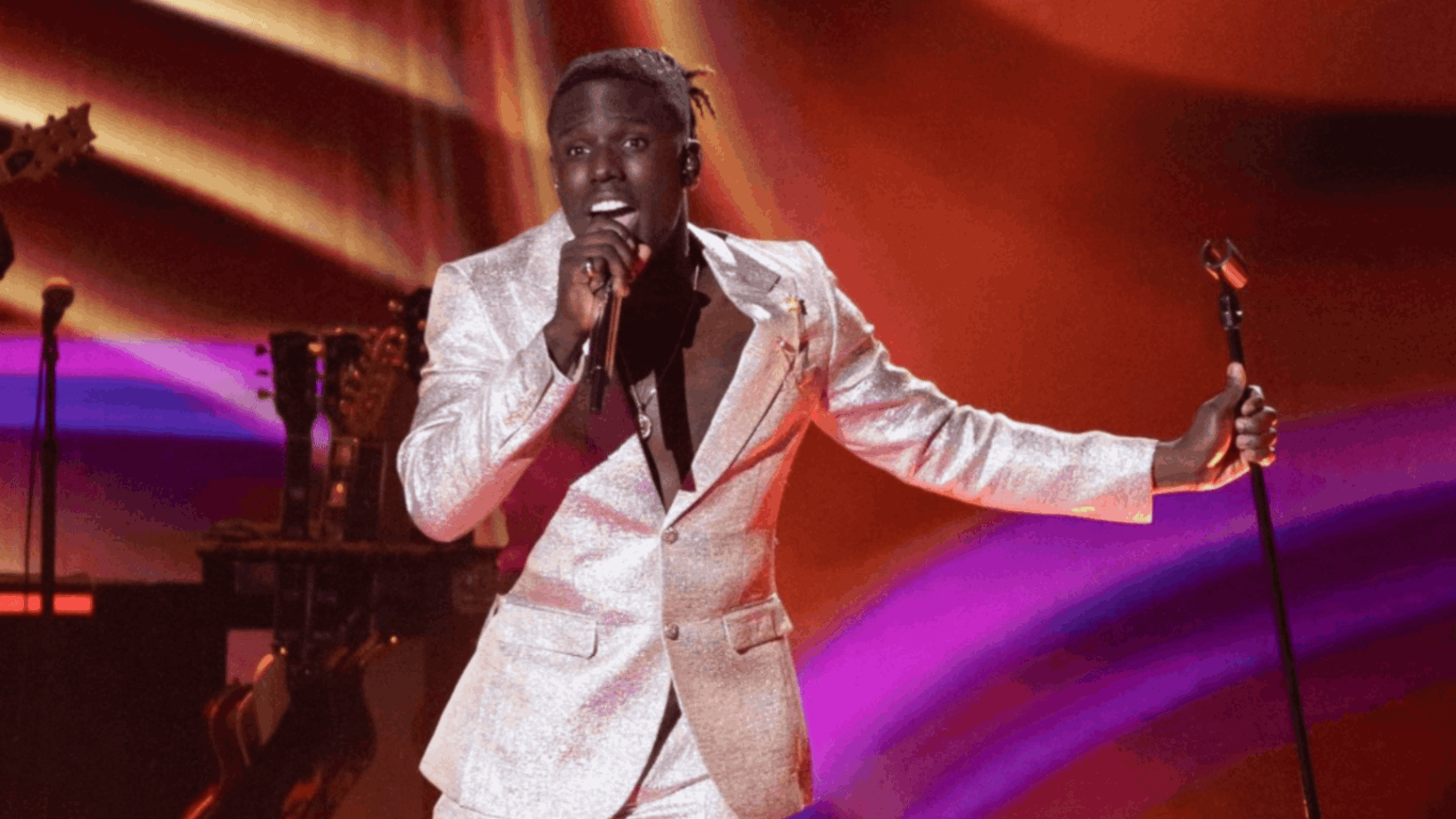
The progression of the performance from a fragile whisper to a resonant declaration of life underscored the profound belief that music remains the ultimate restorative force for the human spirit.
As the song moved into its middle movement, the “holy silence” of the theatre was replaced by a rising tide of vocal power that seemed to surprise even Jamal himself.
It was as if the “shaky” notes had been a necessary clearance of the debris, making way for the “primal call” of his soul to finally break through.
The audience watched in stunned awe as the thinness of his voice began to gain a familiar, gritty texture, a sonic “Redemption” that echoed the themes he has championed throughout his 2026 journey.
By the time the bridge of the song arrived, it was clear that this wasn’t just a singer regaining his technique; it was a man reclaiming his very identity from the shadows of a medical emergency.
By the final movement of the piece, the traditional boundaries between the mentor and the student dissolved entirely, leaving behind a singular, unified frequency of mutual survival.
Neil Diamond eventually stopped singing his background harmonies, realizing that his most important job was to act as the wind beneath Jamal’s wings, providing the rhythmic pulse that kept the younger man upright.
He was “holding him up” with every percussive strike of the piano keys, a visual and auditory metaphor for the way a community must carry its warriors when they are too tired to carry themselves.
This was the “quiet question” of the heart being answered in real-time: yes, there is still room for music that remembers who we are, even when we have forgotten how to stand on our own.
The image of Diamond’s steady hands supporting Jamal’s “shaky” conviction will likely become the defining photograph of the 2026 musical era, a reminder that we are never truly “Indestructible” alone.

The overwhelming emotional response from the theatre audience, which sat in a tearful and reverent hush until the final chord faded, proves that the world is starving for unscripted moments of genuine human grace.
In an industry moving too fast to feel anything real, this performance was a “Symphony of Action” that forced everyone to slow down and acknowledge the “fragile time” we all inhabit.
There were no pyrotechnics, no “All-American” spectacle, and no “shock rock” theatrics; there was only a piano, a spotlight, and two men who refused to let a diagnosis have the last word.
This “unmasking” of the legend has set a new standard for what it means to be a “moral steward” of the arts, suggesting that the most powerful thing an artist can give is not their talent, but their vulnerability.
As the final sunset of the evening’s program approached, the applause didn’t just celebrate the music; it celebrated the courage of a man who stood his ground against the silence.

Ultimately, the night that Jamal Roberts returned to the light with Neil Diamond by his side serves as a permanent reminder that some melodies are too powerful to be silenced by the passage of time or the frailty of the body.
This was the “New Frontier” of 2026—a space where the “outlaws” and the “kings” of music meet to prove that the “Reason to Fight” is a universal anthem.
Jamal has demonstrated that his voice, though changed, is now carrying a weight of “honesty, struggle, and grace” that no younger version of himself could have achieved.
He has shown the world that even when the hands are “shaky,” the heart can remain “Indestructible.”
As the lights finally went up and the two men walked off stage together, the message was unmistakable: the music will always be there to hold us up, as long as we are brave enough to step into the light and sing.