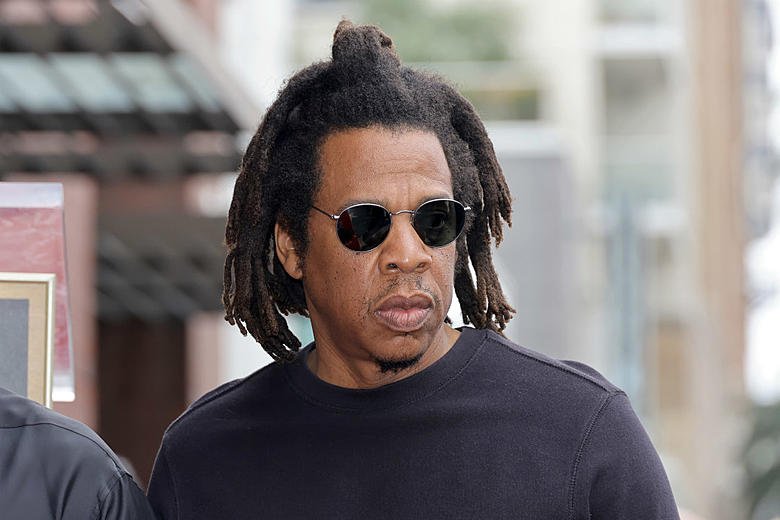

The story begins the way so many modern controversies do: not with a courtroom filing or a press conference, but with a screenshot.
A grainy image of a page—sometimes cropped, sometimes highlighted—starts traveling across platforms at the speed of outrage. It carries two of the biggest names in music, Beyoncé and Jay-Z, and it carries another name that never stops pulling attention back into its orbit: Jeffrey Epstein.
Within hours, the discussion stops being about what the documents actually say and becomes something else entirely. A debate about power. About celebrity. About who gets protected and who gets exposed. About whether the public is being lied to—or whether the public is lying to itself.
The rumor you’re seeing most often is sharper than the rest because it has a dramatic hook: that Beyoncé and Jay-Z “left the country” after being mentioned in documents connected to Epstein. That phrase is designed to do one thing very well—make you assume there’s smoke, and therefore there must be fire.
But if you want to understand what is really behind the story, you have to slow down and separate three different things that are getting blended into one viral narrative: the existence of document releases, the meaning of a name appearing in those materials, and the claim that the couple fled.
Start with the first piece: documents.
In recent months, new waves of Epstein-related records have been discussed widely, including official repositories and disclosures that are heavily redacted and often difficult to interpret without context. The U.S. Department of Justice even maintains a public-facing “Epstein Library” page that points to releases and disclosures, emphasizing the use of redactions to protect victim identities and other sensitive details. (justice.gov)
That alone tells you something important: what the public sees is curated, partial, and filtered through legal obligations. Even when a release is massive, it is not the full story, and it is not designed for casual readers on social media.
Then comes the second piece: what it means to be “mentioned.”
In Epstein-related materials, names appear for countless reasons: contact lists, travel discussions, event invitations, secondhand references, witness statements, media clippings, administrative notes, and more. The presence of a name is not proof of wrongdoing; it can be as banal as someone trying to schedule a meeting or as distant as a rumor repeated by a third party.
This distinction has been stressed repeatedly in public conversations about the files—especially when famous names emerge and the internet treats the mere appearance of a celebrity as a verdict. In a recent example, TV personalities addressed why their names appeared in Epstein-related documents, describing scenarios that had nothing to do with criminal conduct—such as event attendance or logistical mentions about travel. (ew.com)
May you like




Now, the third piece: the claim that Beyoncé and Jay-Z left the country.
This is where the story turns from “documents exist” into “they ran.” It’s also where the evidence tends to thin out dramatically.
Fact-check style write-ups have circulated specifically addressing the claim that Jay-Z left the United States because his name appeared in newly discussed Epstein materials. These pieces note that the rumor spread quickly online and that the supporting proof often comes down to speculative interpretation of appearances, travel photos, or the absence of recent public sightings—none of which is reliable evidence of “fleeing.” (news.meaww.com)
So why does the narrative feel so persuasive to so many people?
Because it is built like a thriller.
A thriller doesn’t begin with a conclusion; it begins with a clue. A name. A date. A connection. Something that might mean nothing—until you decide it means everything.
Online, the most effective rumors are the ones that recruit the reader into doing the work. They don’t just tell you what to believe; they invite you to “investigate,” to join a crowd of amateur detectives searching for patterns in public appearances, award shows, backstage photos, business partnerships, and overlapping timelines.
And when the targets are Beyoncé and Jay-Z, the rumor gets an extra boost for a simple reason: they are already symbols.
They are not only entertainers. They are an empire. A brand. A cultural mirror. For some people, they represent excellence and control; for others, they represent wealth and insulation.
A rumor about them doesn’t stay on the surface. It immediately becomes a proxy battle about what people think celebrity is, what people think power does, and what people think “the industry” hides.
That’s why the discussion often slides away from verifiable claims and into an emotional argument: “People like that always get away with it.” Or its opposite: “This is just another smear campaign.”
Both positions can feel true without being provable.
The documents at the center of the current wave of talk are also part of a broader cultural obsession with the phrase “Epstein client list.” That phrase has become a kind of modern myth—an imagined master key that, if released, would unlock every secret.
But it’s not that simple.
Major news reporting has noted that the “client list” concept is often misunderstood or misrepresented in online discourse. In one prominent report, the Justice Department pushed back on the notion that a definitive “client list” exists in the way the internet imagines it, warning that conspiracy theories can distort real efforts to address exploitation and protect victims. (apnews.com)
That matters because it changes what people think they are looking at.
If you believe there is a single list of guilty names, then any name in any document starts to look like evidence. But if the reality is a messy archive of investigative materials, then a name is just a data point that must be interpreted carefully.
The difference between those two mindsets is the difference between reading and hunting.
Hunting changes how you see everything.
A photo from years ago becomes suspicious. A charity event becomes a cover. A handshake becomes a pact. Even silence becomes incriminating.
And because social media rewards certainty over nuance, the hunting mindset spreads faster.
In the Beyoncé and Jay-Z rumor cycle, you will often see a pattern of “proof” that relies on three kinds of content.
The first is the screenshot—sometimes real, sometimes altered, often cropped in ways that remove context.
The second is the timeline mash-up—public appearances, tour gaps, and travel rumors stitched into a narrative.
The third is the insinuation—phrases like “industry connections” and “overlapping circles,” which sound meaningful but can be applied to almost anyone at the top of entertainment.
None of those categories are useless. They can be starting points for questions. But they are not conclusions.
The most responsible way to approach a rumor like this is to ask not, “Is it possible?” but, “What is actually being claimed, and what would we need to verify it?”
Let’s break the biggest claims into smaller pieces.
Claim one: “They’re mentioned in Epstein documents.”
This could be true in several different ways. Someone could reference them in a statement. Their names could appear in a contact context. Someone could compare another person to them in a completely unrelated message.
Even if a document includes the name “Jay-Z,” it doesn’t automatically mean the document asserts wrongdoing, and it doesn’t automatically mean the mention is reliable.
Public discourse around the latest wave of Epstein-related releases has included examples where names are present in materials such as unverified tips or intake forms, which are not the same thing as adjudicated facts. (ibtimes.co.uk)
Claim two: “There are ‘missing pieces’ the public hasn’t noticed.”
This is the most seductive claim because it is impossible to disprove. If the missing pieces are missing, you can always argue they exist.
It also turns the audience into collaborators. People begin combing through archives, building threads, and repeating the most dramatic interpretations.
Claim three: “They left the country after being mentioned.”
This is where a rumor becomes a story with stakes. Without it, you just have gossip about documents. With it, you have a motive.
But even if they traveled internationally—which celebrities do all the time—that doesn’t validate the implication of flight.
A person can be on a plane for a show, a vacation, a business deal, or simply a normal life decision that has nothing to do with a trending topic.
To prove “they fled,” you’d need more than travel. You’d need credible reporting, confirmed departures tied to a specific timeline, and a reasoned connection to the documents.
That is precisely what online rumor storms usually lack.
So what is behind the story—really?
Behind it is the collision of three forces.
First: a new cycle of Epstein-related document talk that reliably resurfaces whenever releases or summaries appear, especially when they include large troves, redactions, or lists of referenced names.
Second: a social media ecosystem that treats celebrity as a courtroom and engagement as a verdict.
Third: the psychological satisfaction of patterns.
Humans are pattern machines. We connect dots even when dots are random.
And in a world where many people believe powerful systems protect powerful people, patterns feel like proof—even when they are just narrative.
There is also a darker dimension that often sits beneath the surface: some rumors are not accidental.
When a story targets a global celebrity couple, it can be weaponized for many purposes. It can be used to attack a brand. To pull attention from another headline. To drive traffic to low-quality “explainers.” To farm engagement.
And sometimes it can be used as a cultural litmus test: who believes it, who rejects it, and how quickly communities polarize.
You can see this polarization in the way posts are written.
One side uses language of certainty: “It’s all coming out.” “They’re exposed.” “The truth is finally here.”
The other uses language of dismissal: “This is nonsense.” “It’s a smear.” “Stop spreading lies.”
But both sides often skip the slow work of verification.
That slow work begins with primary sources.
Official repositories, where available, matter because they provide original context, redaction notes, and release frameworks. The DOJ’s own page points to disclosures and explains that victim identities and sensitive information are redacted—an important reminder that even primary sources are incomplete. (justice.gov)
Independent archives and searchable databases also exist, but they vary in reliability, completeness, and editorial framing. Some are designed for browsing; some are designed for advocacy; some are designed for attention.
If you are reading about a celebrity being “named,” ask yourself: named where, exactly?
Is it in a court filing? A deposition? An email? A tip line form? A news clipping included in an investigative binder? A handwritten note?
Those contexts are not interchangeable.
A deposition is sworn testimony. An intake note is a record of an allegation, not a determination. An email might be about logistics. A list might be a contact directory.
When people collapse all of these into the word “named,” they create an illusion of certainty.
This is why credible journalism tends to be cautious around Epstein-related releases.
Reporters must navigate victim protection, legal restrictions, redaction limitations, and the responsibility not to imply guilt by association. They also must report on what the documents do and do not show.
That caution can frustrate audiences who want a clean answer: guilty or innocent.
But the truth is rarely clean.
And that discomfort—of not knowing—fuels the rumor market.
In the case of Beyoncé and Jay-Z, the public hunger for a clean answer has collided with the internet’s love of a mythic takedown.
If you look closely at the way the rumor is packaged, you’ll notice it often avoids direct claims that could be legally risky. Instead, it relies on suggestion.
“Mentioned in documents.”
“Overlapping timelines.”
“Industry connections.”
“Left the country.”
None of those phrases explicitly says a crime occurred. But together, they build a mood.
A mood can be more powerful than a fact.
Because a mood doesn’t need evidence to spread. It only needs to feel plausible.
And plausibility in online spaces often comes from repetition.
Once you’ve seen the claim ten times, your brain starts treating it as familiar. Familiar becomes believable. Believable becomes “everyone knows.”
That’s why the question “Are these details coincidences?” is such an effective engine. It makes coincidence feel like a cover story.
But coincidence is everywhere in celebrity ecosystems.
Famous people attend the same events. Work with the same agencies. Share the same venues. Fly through the same airports. Pose in the same photos.
If you search long enough, overlap becomes inevitable.
So what should you do if you want to be informed without being manipulated?
You can start by asking four practical questions whenever a viral Epstein-related celebrity story appears.
First: What is the source of the claim?
If the answer is “a thread,” “a screenshot,” or “someone said,” treat it as unverified until a primary document is provided and confirmed.
Second: What is the exact wording in the primary material?
A name might appear in a sentence that means nothing like what the viral post implies.
Third: Is the content an allegation, a fact, or an interpretation?
People often present interpretations as facts, especially when they highlight text and add dramatic captions.
Fourth: Who benefits from you believing this right now?
This doesn’t mean the claim is false. It means you should notice incentives: clicks, follows, political agendas, brand attacks, or plain attention.
Once you step back and apply those questions, the Beyoncé and Jay-Z rumor begins to look less like an unfolding expose and more like a case study in how public uncertainty gets monetized.
Still, it’s understandable why people feel unsettled.
The Epstein case is not abstract. It involved real victims, real exploitation, and real institutional failures.
For many people, celebrity rumors feel like one of the few ways to force accountability onto an opaque world.
But accountability cannot be built on insinuation.
If the goal is justice, the path has to include careful evidence, responsible reporting, and a refusal to turn victims’ trauma into entertainment.
That doesn’t mean powerful people should never be scrutinized.
It means scrutiny should be precise.
Precision is harder than virality. But precision is what separates truth-seeking from mob theater.
Now consider the emotional engine at the center of this rumor: the idea that the couple would leave the country.
The story begins the way so many modern controversies do: not with a courtroom filing or a press conference, but with a screenshot.
A grainy image of a page—sometimes cropped, sometimes highlighted—starts traveling across platforms at the speed of outrage. It carries two of the biggest names in music, Beyoncé and Jay-Z, and it carries another name that never stops pulling attention back into its orbit: Jeffrey Epstein.
Within hours, the discussion stops being about what the documents actually say and becomes something else entirely. A debate about power. About celebrity. About who gets protected and who gets exposed. About whether the public is being lied to—or whether the public is lying to itself.
The rumor you’re seeing most often is sharper than the rest because it has a dramatic hook: that Beyoncé and Jay-Z “left the country” after being mentioned in documents connected to Epstein. That phrase is designed to do one thing very well—make you assume there’s smoke, and therefore there must be fire.
But if you want to understand what is really behind the story, you have to slow down and separate three different things that are getting blended into one viral narrative: the existence of document releases, the meaning of a name appearing in those materials, and the claim that the couple fled.
Start with the first piece: documents.
In recent months, new waves of Epstein-related records have been discussed widely, including official repositories and disclosures that are heavily redacted and often difficult to interpret without context. The U.S. Department of Justice even maintains a public-facing “Epstein Library” page that points to releases and disclosures, emphasizing the use of redactions to protect victim identities and other sensitive details. (justice.gov)
That alone tells you something important: what the public sees is curated, partial, and filtered through legal obligations. Even when a release is massive, it is not the full story, and it is not designed for casual readers on social media.
Then comes the second piece: what it means to be “mentioned.”
In Epstein-related materials, names appear for countless reasons: contact lists, travel discussions, event invitations, secondhand references, witness statements, media clippings, administrative notes, and more. The presence of a name is not proof of wrongdoing; it can be as banal as someone trying to schedule a meeting or as distant as a rumor repeated by a third party.
This distinction has been stressed repeatedly in public conversations about the files—especially when famous names emerge and the internet treats the mere appearance of a celebrity as a verdict. In a recent example, TV personalities addressed why their names appeared in Epstein-related documents, describing scenarios that had nothing to do with criminal conduct—such as event attendance or logistical mentions about travel. (ew.com)
Now, the third piece: the claim that Beyoncé and Jay-Z left the country.
This is where the story turns from “documents exist” into “they ran.” It’s also where the evidence tends to thin out dramatically.
Fact-check style write-ups have circulated specifically addressing the claim that Jay-Z left the United States because his name appeared in newly discussed Epstein materials. These pieces note that the rumor spread quickly online and that the supporting proof often comes down to speculative interpretation of appearances, travel photos, or the absence of recent public sightings—none of which is reliable evidence of “fleeing.” (news.meaww.com)
So why does the narrative feel so persuasive to so many people?
Because it is built like a thriller.
A thriller doesn’t begin with a conclusion; it begins with a clue. A name. A date. A connection. Something that might mean nothing—until you decide it means everything.
Online, the most effective rumors are the ones that recruit the reader into doing the work. They don’t just tell you what to believe; they invite you to “investigate,” to join a crowd of amateur detectives searching for patterns in public appearances, award shows, backstage photos, business partnerships, and overlapping timelines.
And when the targets are Beyoncé and Jay-Z, the rumor gets an extra boost for a simple reason: they are already symbols.
They are not only entertainers. They are an empire. A brand. A cultural mirror. For some people, they represent excellence and control; for others, they represent wealth and insulation.
A rumor about them doesn’t stay on the surface. It immediately becomes a proxy battle about what people think celebrity is, what people think power does, and what people think “the industry” hides.
That’s why the discussion often slides away from verifiable claims and into an emotional argument: “People like that always get away with it.” Or its opposite: “This is just another smear campaign.”
Both positions can feel true without being provable.
The documents at the center of the current wave of talk are also part of a broader cultural obsession with the phrase “Epstein client list.” That phrase has become a kind of modern myth—an imagined master key that, if released, would unlock every secret.
But it’s not that simple.
Major news reporting has noted that the “client list” concept is often misunderstood or misrepresented in online discourse. In one prominent report, the Justice Department pushed back on the notion that a definitive “client list” exists in the way the internet imagines it, warning that conspiracy theories can distort real efforts to address exploitation and protect victims. (apnews.com)
That matters because it changes what people think they are looking at.
If you believe there is a single list of guilty names, then any name in any document starts to look like evidence. But if the reality is a messy archive of investigative materials, then a name is just a data point that must be interpreted carefully.
The difference between those two mindsets is the difference between reading and hunting.
Hunting changes how you see everything.
A photo from years ago becomes suspicious. A charity event becomes a cover. A handshake becomes a pact. Even silence becomes incriminating.
And because social media rewards certainty over nuance, the hunting mindset spreads faster.
In the Beyoncé and Jay-Z rumor cycle, you will often see a pattern of “proof” that relies on three kinds of content.
The first is the screenshot—sometimes real, sometimes altered, often cropped in ways that remove context.
The second is the timeline mash-up—public appearances, tour gaps, and travel rumors stitched into a narrative.
The third is the insinuation—phrases like “industry connections” and “overlapping circles,” which sound meaningful but can be applied to almost anyone at the top of entertainment.
None of those categories are useless. They can be starting points for questions. But they are not conclusions.
The most responsible way to approach a rumor like this is to ask not, “Is it possible?” but, “What is actually being claimed, and what would we need to verify it?”
Let’s break the biggest claims into smaller pieces.
Claim one: “They’re mentioned in Epstein documents.”
This could be true in several different ways. Someone could reference them in a statement. Their names could appear in a contact context. Someone could compare another person to them in a completely unrelated message.
Even if a document includes the name “Jay-Z,” it doesn’t automatically mean the document asserts wrongdoing, and it doesn’t automatically mean the mention is reliable.
Public discourse around the latest wave of Epstein-related releases has included examples where names are present in materials such as unverified tips or intake forms, which are not the same thing as adjudicated facts. (ibtimes.co.uk)
Claim two: “There are ‘missing pieces’ the public hasn’t noticed.”
This is the most seductive claim because it is impossible to disprove. If the missing pieces are missing, you can always argue they exist.
It also turns the audience into collaborators. People begin combing through archives, building threads, and repeating the most dramatic interpretations.
Claim three: “They left the country after being mentioned.”
This is where a rumor becomes a story with stakes. Without it, you just have gossip about documents. With it, you have a motive.
But even if they traveled internationally—which celebrities do all the time—that doesn’t validate the implication of flight.
A person can be on a plane for a show, a vacation, a business deal, or simply a normal life decision that has nothing to do with a trending topic.
To prove “they fled,” you’d need more than travel. You’d need credible reporting, confirmed departures tied to a specific timeline, and a reasoned connection to the documents.
That is precisely what online rumor storms usually lack.
So what is behind the story—really?
Behind it is the collision of three forces.
First: a new cycle of Epstein-related document talk that reliably resurfaces whenever releases or summaries appear, especially when they include large troves, redactions, or lists of referenced names.
Second: a social media ecosystem that treats celebrity as a courtroom and engagement as a verdict.
Third: the psychological satisfaction of patterns.
Humans are pattern machines. We connect dots even when dots are random.
And in a world where many people believe powerful systems protect powerful people, patterns feel like proof—even when they are just narrative.
There is also a darker dimension that often sits beneath the surface: some rumors are not accidental.
When a story targets a global celebrity couple, it can be weaponized for many purposes. It can be used to attack a brand. To pull attention from another headline. To drive traffic to low-quality “explainers.” To farm engagement.
And sometimes it can be used as a cultural litmus test: who believes it, who rejects it, and how quickly communities polarize.
You can see this polarization in the way posts are written.
One side uses language of certainty: “It’s all coming out.” “They’re exposed.” “The truth is finally here.”
The other uses language of dismissal: “This is nonsense.” “It’s a smear.” “Stop spreading lies.”
But both sides often skip the slow work of verification.
That slow work begins with primary sources.
Official repositories, where available, matter because they provide original context, redaction notes, and release frameworks. The DOJ’s own page points to disclosures and explains that victim identities and sensitive information are redacted—an important reminder that even primary sources are incomplete. (justice.gov)
Independent archives and searchable databases also exist, but they vary in reliability, completeness, and editorial framing. Some are designed for browsing; some are designed for advocacy; some are designed for attention.
If you are reading about a celebrity being “named,” ask yourself: named where, exactly?
Is it in a court filing? A deposition? An email? A tip line form? A news clipping included in an investigative binder? A handwritten note?
Those contexts are not interchangeable.
A deposition is sworn testimony. An intake note is a record of an allegation, not a determination. An email might be about logistics. A list might be a contact directory.
When people collapse all of these into the word “named,” they create an illusion of certainty.
This is why credible journalism tends to be cautious around Epstein-related releases.
Reporters must navigate victim protection, legal restrictions, redaction limitations, and the responsibility not to imply guilt by association. They also must report on what the documents do and do not show.
That caution can frustrate audiences who want a clean answer: guilty or innocent.
But the truth is rarely clean.
And that discomfort—of not knowing—fuels the rumor market.
In the case of Beyoncé and Jay-Z, the public hunger for a clean answer has collided with the internet’s love of a mythic takedown.
If you look closely at the way the rumor is packaged, you’ll notice it often avoids direct claims that could be legally risky. Instead, it relies on suggestion.
“Mentioned in documents.”
“Overlapping timelines.”
“Industry connections.”
“Left the country.”
None of those phrases explicitly says a crime occurred. But together, they build a mood.
A mood can be more powerful than a fact.
Because a mood doesn’t need evidence to spread. It only needs to feel plausible.
And plausibility in online spaces often comes from repetition.
Once you’ve seen the claim ten times, your brain starts treating it as familiar. Familiar becomes believable. Believable becomes “everyone knows.”
That’s why the question “Are these details coincidences?” is such an effective engine. It makes coincidence feel like a cover story.
But coincidence is everywhere in celebrity ecosystems.
Famous people attend the same events. Work with the same agencies. Share the same venues. Fly through the same airports. Pose in the same photos.
If you search long enough, overlap becomes inevitable.
So what should you do if you want to be informed without being manipulated?
You can start by asking four practical questions whenever a viral Epstein-related celebrity story appears.
First: What is the source of the claim?
If the answer is “a thread,” “a screenshot,” or “someone said,” treat it as unverified until a primary document is provided and confirmed.
Second: What is the exact wording in the primary material?
A name might appear in a sentence that means nothing like what the viral post implies.
Third: Is the content an allegation, a fact, or an interpretation?
People often present interpretations as facts, especially when they highlight text and add dramatic captions.
Fourth: Who benefits from you believing this right now?
This doesn’t mean the claim is false. It means you should notice incentives: clicks, follows, political agendas, brand attacks, or plain attention.
Once you step back and apply those questions, the Beyoncé and Jay-Z rumor begins to look less like an unfolding expose and more like a case study in how public uncertainty gets monetized.
Still, it’s understandable why people feel unsettled.
The Epstein case is not abstract. It involved real victims, real exploitation, and real institutional failures.
For many people, celebrity rumors feel like one of the few ways to force accountability onto an opaque world.
But accountability cannot be built on insinuation.
If the goal is justice, the path has to include careful evidence, responsible reporting, and a refusal to turn victims’ trauma into entertainment.
That doesn’t mean powerful people should never be scrutinized.
It means scrutiny should be precise.
Precision is harder than virality. But precision is what separates truth-seeking from mob theater.
Now consider the emotional engine at the center of this rumor: the idea that the couple would leave the country.
That idea triggers a very old story template: the powerful running from consequences.
It also triggers a very modern story template: the internet catching someone before traditional institutions do.
When you combine those templates, you get a narrative that feels like a movie—except that real people are inside it.
And in that movie, every new absence becomes meaningful.
No recent posts? Suspicious.
No public sightings? Suspicious.
A private jet rumor? Suspicious.
A blurry photo in another country? Confirmation.
The film writes itself.
But films are edited.
Reality isn’t.
In reality, celebrities can go quiet for ordinary reasons: work, privacy, family, health, security.
And celebrities travel constantly, often without public awareness.
It is dangerously easy to mistake the normal logistics of a famous life for a confession.
If you want an honest answer to “what’s really behind the story,” the most responsible answer is also the least satisfying: a blend of partial document context, online pattern-making, and a rumor structure that exploits the public’s desire for clarity.
That answer doesn’t deliver a villain or a twist.
But it does deliver something more useful: the ability to see the mechanism.
And once you see the mechanism, you can’t unsee it.
You notice how a single mention can be inflated into an accusation.
You notice how “documents” becomes a magic word that stops people from asking what kind of documents.
You notice how the claim “no official conclusions have been confirmed” is often used not as a caution, but as bait.
Because “no official conclusions” also implies “the official story isn’t done yet.”
That implication keeps audiences watching.
It keeps them refreshing.
It keeps them sharing.
Now, there is one more layer that deserves attention.
Even if a celebrity’s name appears in a file, it can create real-world consequences: harassment, threats, brand damage, and a permanent cloud of suspicion.
That consequence is part of why responsible outlets emphasize context and avoid guilt by association.
It is also why some outlets publish “explainers” on why a name might appear at all—reminding readers that being referenced does not equal involvement in crimes