The internet is in full meltdown mode after viral posts claimed the FBI “raided” Naomi Campbell’s private island in connection with newly resurfaced Jeffrey Epstein-related material. The claim is spreading fast across TikTok, X, and YouTube commentary channels, alongside screenshots people insist are “Epstein videos” and “files” that allegedly tie the supermodel to a much darker network.
There is one major problem: the most explosive pieces of the story remain unverified in any official, public way. No on-the-record statement from the FBI confirming a raid on Campbell’s private property has been provided in the circulating posts, and no publicly authenticated “Epstein videos” have been released that prove the sweeping claims being attached to them online.
Still, the frenzy is real, and it is pulling Naomi’s name into the center of an old, ugly rumor cycle that never fully died: the idea that she acted as a glamorous “connector” between young women and wealthy men, including Epstein, under the cover of fashion opportunities and elite social access.
On one side, critics argue the pattern is too consistent to ignore, citing flight-log chatter, past photographs, and long-running whispers from the industry. On the other, defenders argue that proximity is not proof, viral “files” are routinely misread, and sensational accounts are using Naomi’s notoriety as clickbait.
As the speculation builds, a handful of old interviews and clips are being repackaged as “receipts,” including Naomi’s own past insistence that she did not know what Epstein was doing. In a widely circulated interview segment, she described being introduced to Epstein at a birthday gathering and said his crimes made her sick.
“I was introduced to him on my 31st birthday by my ex-boyfriend Flavio.”
“What he’s done is indefensible.”
Those statements are now being re-litigated in comment sections where users demand to know how someone could be around Epstein socially and not suspect anything. Others respond that Epstein’s entire operation depended on appearing legitimate and blending into elite spaces, and that many people met him without understanding the scope of his alleged abuse.
The newest wave of online claims escalates beyond social proximity. It alleges the FBI has “finally” moved from documents to action and is “questioning more people” and making “first arrests,” with Naomi allegedly at the top of the public’s wish list.
But “people want her locked up” is not the same as “law enforcement has charged her,” and at this time, the viral posts do not provide verifiable court filings, warrants, or official confirmation of any raid.

Even so, the rumors are gaining traction because Naomi Campbell has a long public history that critics argue fits an uncomfortable theme: repeated association with powerful, controversial men—and repeated denials when questioned about what she knew.
The Epstein angle is being fueled by claims that Naomi appears in “newly released DOJ files,” that she exchanged messages with Epstein, and that she traveled in circles that overlapped with his. Some posts further claim she was on Epstein’s private jet flight logs and visited locations linked to his properties.
These claims are often presented with dramatic certainty, but the public must be careful with what “in the files” means. Names can appear in documents for many reasons, including innocuous contact details, scheduling references, or social notes, and being mentioned does not automatically indicate wrongdoing.
What can be said without speculation is that Epstein cultivated access to celebrities, business leaders, politicians, and public figures, and his social world overlapped with many high-profile names. That overlap has produced years of rumor, and it also produced legitimate questions about who enabled him—and who simply crossed paths with him.
As the internet argues, one of the most incendiary allegations spreading right now is that Naomi acted like a “madam,” recruiting women by dangling career opportunities. The posts repeat a familiar storyline: a young woman gets introduced to wealth and glamour, is promised access, and then is exposed to exploitation.
The “proof” offered in these viral threads is typically indirect—clips of Naomi networking, old party footage, vague references to “emails,” and commentary claiming that models “went missing” after being recruited. None of these elements, as circulated, constitute verified evidence of criminal activity by Naomi Campbell.
Yet the rumor keeps coming back because it mirrors real, documented tactics used by predators: recruitment through opportunity, grooming through luxury, and coercion hidden behind prestige. That truth makes the narrative feel plausible to many readers, even when a specific claim has not been proven.
Adding fuel is the resurfacing of a deeply troubling interview-style clip about exploitation in elite circles, describing a young woman allegedly being moved through Europe, manipulated by a powerful partner, and assaulted at parties by older men. The clip, now widely reposted, is being used as a general “this is how it happens” explanation.
“She eventually started traveling to Europe… she was stuck in Paris.”

“I had to go pick her up in Paris and bring her back to New York to get her out.”
The clip’s details are difficult to verify from viral reposts alone, and it is not proof of Naomi’s involvement. But it is being deployed emotionally to suggest a pipeline: introductions, parties, isolation, and then exploitation.
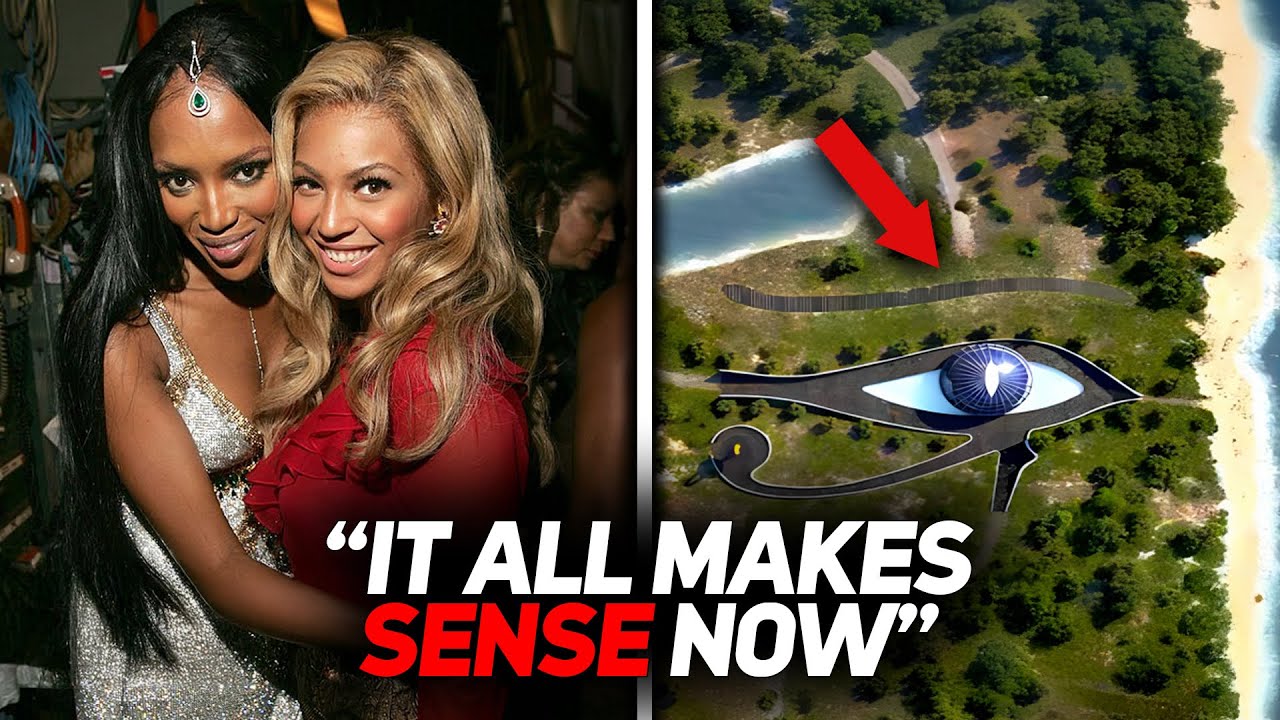
Another viral element is the claim that Naomi “owns an island,” and that her wealth and lifestyle prove she is bankrolled by shady men. On social media, that argument is often framed as: how could a model afford a private island without hidden funding?
The counterargument is straightforward: Naomi Campbell is one of the most famous supermodels in history, with decades of earnings, endorsements, and business ventures. Wealth alone is not a criminal indicator, and “she must be funded” is not evidence.
Still, the rumor machine does not stop there. Posts claim her private villa looks “satanic,” that it was “investigated,” and that the aesthetics are part of the “proof.”
That kind of language is classic online sensationalism—moral panic dressed up as investigation. Architecture and decor do not establish criminal conduct, and vague claims of “investigation” are meaningless without verifiable sources.
The frenzy has also revived older controversies involving Naomi that are real, documented, and separate from Epstein—controversies that critics say reveal a pattern of questionable judgment and aggressive behavior.
One of the most high-profile examples is Naomi’s involvement as a witness in the case against former Liberian president Charles Taylor, where she testified about receiving stones that were widely described in media as “blood diamonds.” Naomi initially resisted discussing it publicly, then later spoke under oath about a strange late-night delivery.
“When I was sleeping, I had a knock at my door… two men were there and gave me a pouch.”
“They were kind of dirty looking pebbles.”
That testimony became part of Naomi’s public record, and it has been used repeatedly to argue she moves in dangerous circles and minimizes what she sees. Her supporters argue the opposite: that she ultimately cooperated and that the broader political crimes were not hers.
Beyond that, Naomi has faced repeated allegations of mistreating staff in the past, including incidents that generated lawsuits and headlines. Those stories—whether settled, denied, or litigated—have created a reputation for volatility that critics now fold into the Epstein narrative.
Online, the logic becomes: if she was capable of X, then she is capable of Y. That is emotionally persuasive, but it is not legally sound.
A separate controversy also continues to circulate: claims that a charity connected to Naomi faced scrutiny over finances and spending. Those allegations—when reported—have been discussed in the context of governance, accountability, and celebrity philanthropy optics.
Again, even if true in some form, that does not prove trafficking or recruitment for Epstein. But in the attention economy, everything becomes part of one giant story.
The most viral “character” in the current cycle, besides Naomi, is Kenyan-born influencer Elsa Majimbo. In reposted clips, Elsa describes being pulled into Naomi’s orbit as a young rising star, being offered travel, being introduced to wealthy people, and later feeling professionally iced out after refusing to play a certain game.

“Do you and your brother want to join us on holiday?”
Elsa’s account, as it appears in circulating clips, is subjective and personal. It is also being used as a broader warning narrative: Naomi allegedly scouts young talent, offers access, and expects loyalty and control.
In Elsa’s retelling, a conversation with other wealthy vacation companions shocked her—she claims someone told her Naomi “made” her career, which Elsa disputes. Later, Elsa describes receiving a phone call where Naomi sounded furious and abruptly cut her off.
“Elsa, how dare you?”
“This is the last time I’m speaking to you. Have a nice life.”
Elsa then alleges that after the fallout, opportunities dried up and she spiraled emotionally, describing heavy drinking and a period of confusion about what went wrong. She frames Naomi’s disapproval as a dangerous thing in an industry built on gatekeeping.
It is a compelling story, and it resonates with anyone who has seen how quickly doors close when powerful people withdraw support. But it is not direct proof of Epstein recruitment or criminal conduct, even if it raises questions about influence and control.
That is where the “both sides” reality becomes essential.
Critics of Naomi argue that the Elsa story fits a broader pattern: Naomi as a connector who brings young women into proximity with wealthy men. They point to her history of elite friendships, parties, and global connections as the mechanism.
Defenders argue that networking is literally the job in fashion and entertainment, that introducing people is not trafficking, and that young influencers can misinterpret social dynamics they are unprepared for. They also argue that online audiences are collapsing “uncomfortable power dynamics” into “criminal conspiracy” without evidence.
In the Epstein context, the same split plays out. Some insist that if Naomi was emailing Epstein or appearing in travel logs, it implies she knew. Others insist that social contact does not equal knowledge of crimes—and that Epstein’s public persona was intentionally designed to appear legitimate.
Naomi herself has previously attempted to draw that line, emphasizing her disgust at Epstein’s actions and aligning herself with victims. That stance is being challenged by viral posts that claim to show correspondence and coordination.
“I stand with the victims.”
The rage online is also amplified by a second name: Harvey Weinstein. Viral commenters repeatedly mention Naomi’s social proximity to Weinstein and argue it establishes a pattern of being close to predatory men.
Weinstein, however, is a separate case with its own documented criminal proceedings. Proximity to Weinstein does not automatically prove knowledge or participation in his crimes, though it can raise legitimate questions about how Hollywood normalized predatory behavior for years.
In a culture that has watched powerful men hide in plain sight, audiences have become skeptical of any celebrity who insists they “had no idea.” That skepticism is understandable. It is also not the same as proof.
The most dangerous part of the current cycle is the headline claim itself: “FBI raids Naomi Campbell’s private island.” That is a factual assertion that requires strong sourcing—official statements, credible reporting, or public records.
In the viral content, the “raid” claim is often supported only by commentary, anonymous posts, and edited compilations. Some accounts point to “first arrests,” but do not list names, charges, jurisdictions, or case numbers.
Without those basics, the claim remains alleged.
And yet, the allegation spreads because it fits what people want to believe: that law enforcement is finally acting, that the rich are finally being held accountable, and that Epstein’s shadow is finally touching famous faces.
That hunger is real, especially after years of frustration over how long Epstein moved through elite spaces. People want resolution, accountability, and consequences.
But the risk is that in chasing accountability, the public may accept narratives that are unverified, defamatory, or outright false—and that can ultimately undermine real justice for real victims.
There is also a cynical media layer here. Celebrity scandal content performs. Epstein content performs even more. And Naomi Campbell, with her decades-long fame and polarizing reputation, is a high-engagement target.
The phrase “private island” alone is clickbait gold.
If any law-enforcement action truly occurred, it would be a significant development that reputable outlets would likely cover with basic verifiable details. The absence of that standard information is why this story must be framed cautiously as an online claim, not a confirmed event.
Still, Naomi cannot control what the internet does with her name. And her history makes it easier for the rumors to stick.
She has faced real controversies. She has had public conflicts. She has been drawn into geopolitical scandal. She has navigated elite circles that most people will never see from the inside.
That doesn’t prove Epstein involvement. But it does create a perception problem, and perception is often the first conviction in the court of public opinion.
The viral narrative also leans heavily on the idea that “everyone has heard” Naomi recruited girls for Epstein. But popularity of a rumor does not make it true. Rumors can persist because they are sensational, because they fit cultural fears, or because they are repeated by people who assume repetition equals verification.
At the same time, it would be equally dishonest to pretend the questions are coming from nowhere. Epstein’s network did involve recruitment mechanisms. It did involve social facilitators. It did involve gatekeepers who made introductions and normalized access.
The public interest question is whether Naomi was one of them—and the only responsible answer right now, based on what is being circulated, is that the claim is disputed and not proven by the viral posts alone.
In the comments, the temperature keeps rising. Some users argue Naomi “always gets away with it,” citing her ability to remain a global fashion fixture despite scandal. Others argue she is being targeted precisely because she is famous and complicated, while more powerful figures escape scrutiny.
“I really don’t like how easily Naomi Campbell gets away… no one seems to care.”
Others go further, labeling her a trafficker and demanding confrontation. Those accusations are severe. Making them without verified evidence is legally and ethically risky—and it can also drown out legitimate reporting by turning the conversation into a mob chant.
For Naomi, the strategy has historically been denial, distance, and a focus on work. In past interviews about Epstein, she has insisted she did not know his crimes and expressed sympathy for victims.
For critics, that is not enough. They want timelines, receipts, and explanations for any contact that appears in documents. They want to know why she was in those circles at all.
For defenders, the story is spiraling into misinformation—another case of the internet confusing “in the same room” with “in the same operation.”
What happens next depends on facts that have not yet been established publicly. If there was an actual raid, it will surface through credible documentation. If there are authenticated videos, they will be verified through reliable reporting and legal context, not through anonymous accounts selling fear.
Until then, the honest framing remains uncomfortable but necessary: the claims are allegations, the interpretations are disputed, and the viral “proof” does not, on its own, meet the standard of confirmation.
Naomi Campbell is a lightning rod because she represents a certain kind of elite access—fashion’s front row, private jets, powerful friends, global philanthropy, and luxury that can look like a cover story to anyone who already believes the world is run by predators.
But justice cannot be built on vibes. It has to be built on evidence.
For now, what the internet “fears” is being sold as what the internet “knows.” And in the age of algorithmic outrage, that difference can disappear in a single scroll.
The only question left is whether the story collapses under scrutiny—or whether verifiable facts emerge that force a very different conversation about who knew what, who enabled whom, and how close celebrity culture really was to one of the most notorious predators of the modern era.