CHRIS BROWN STUNS: “I CAUGHT THEM” – WHAT REALLY HAPPENED BETWEEN RIHANNA AND JAY-Z?
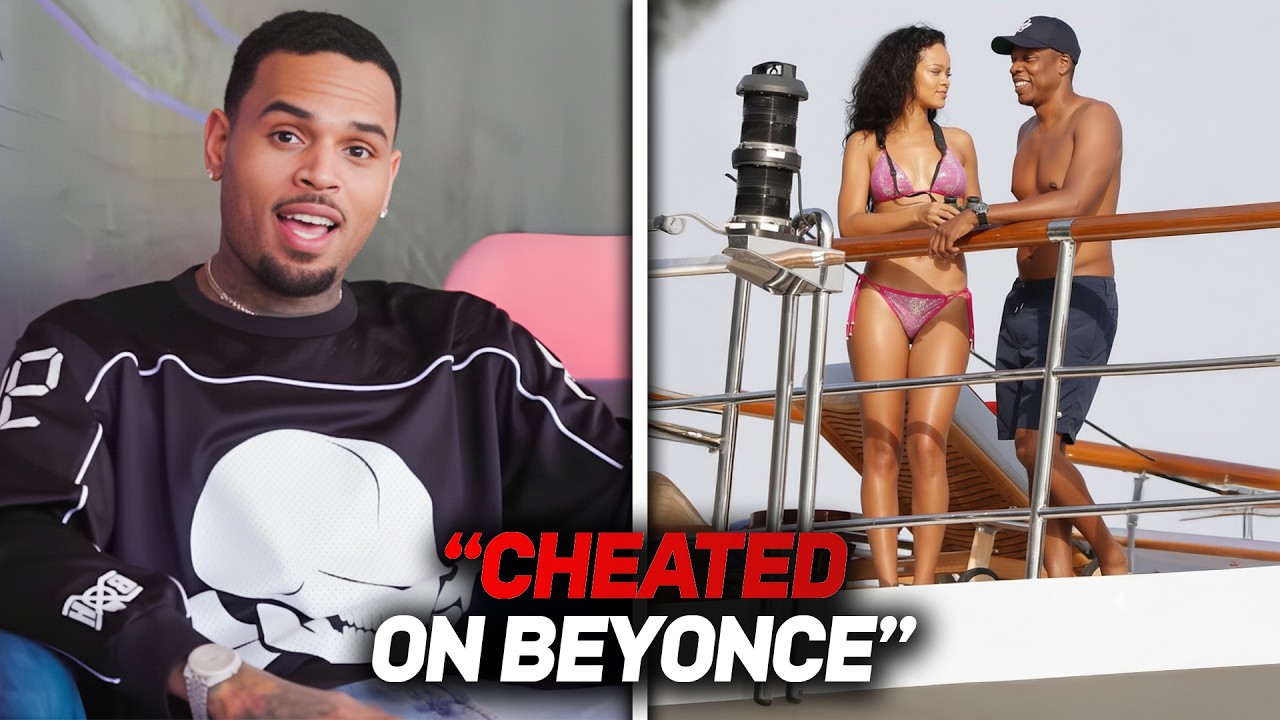
When Chris Brown recently suggested that he once “caught” something he wasn’t meant to see between Rihanna and Jay-Z, the internet did what it does best: it split down the middle and chose sides before the dust even had time to rise.
The remark itself was brief.
No detailed timeline.
No explicit accusation.
Just a carefully chosen phrase that implied far more than it explained.
Yet in an industry where silence is often more strategic than speech, even a hint can detonate like a headline.
For years, the triangle—if it can even be called that—has existed more as rumor than record.
Jay-Z, the mogul whose influence shaped careers.
Rihanna, the prodigy who rose under his mentorship and quickly eclipsed expectations.
Chris Brown, the young star whose relationship with Rihanna once dominated tabloids and defined a generation’s most public unraveling.
Their names have shared columns before.
But rarely like this.
Brown’s recent comments appear to revisit a period when everything was fragile.
Careers were ascending.
Relationships were volatile.
Power dynamics were shifting behind closed doors.
According to those who claim to understand the context, the moment he referenced allegedly occurred during a time when tensions were already simmering.
The way he framed it—“I caught them”—was ambiguous enough to ignite speculation, but precise enough to feel deliberate.
What exactly did he see? A conversation? A closeness that crossed professional boundaries? Or something else entirely? He did not elaborate.
And perhaps that is the point.
Industry insiders have long acknowledged that the relationship between Rihanna and Jay-Z extended beyond a typical artist–executive dynamic.
He signed her to Def Jam at just 16.
He championed her early singles.
He placed her in rooms few newcomers ever access.
To some, it was mentorship at its finest.
To others, it represented the complicated intersections of youth, ambition, and power in an industry that rarely draws clear lines.
Brown’s implication has reopened those old debates with surgical timing.
Critics argue that resurrecting this narrative risks casting shadows without offering proof.
Supporters counter that power imbalances in entertainment have historically thrived on silence—and that even vague recollections deserve scrutiny.
There is also the matter of timing.
Brown has spent years navigating a turbulent public image, oscillating between commercial success and controversy.
Every statement he makes is filtered through that lens.
When he speaks about the past, observers inevitably question whether it is catharsis or calculation.
Yet dismissing the comment outright feels equally premature.
The music industry has, in recent years, undergone a reckoning.
Stories once dismissed as gossip have evolved into documented patterns.
Allegations once whispered have become headlines with legal consequences.
In that environment, even a suggestion carries weight.
Rihanna, notably, has not responded.
She has built a billion-dollar empire, distanced herself from old narratives, and positioned her brand above tabloid cycles.
Jay-Z, similarly, has cultivated an aura of strategic silence.
He rarely addresses rumor unless it threatens tangible business interests.
If either chooses to remain quiet now, that silence will be interpreted in a hundred different ways.
Social media, meanwhile, has transformed Brown’s words into a battlefield.
Some users insist he is exposing a truth long hidden.
Others accuse him of exploiting speculation to reinsert himself into a storyline that no longer centers him.
Screenshots circulate.
Old interviews resurface.
Lyrics are dissected for coded meaning.
Every glance in archived photographs is treated as potential evidence.
But beyond the digital noise lies a larger question: why does this narrative still resonate?
Part of the answer may be rooted in unfinished cultural memory.
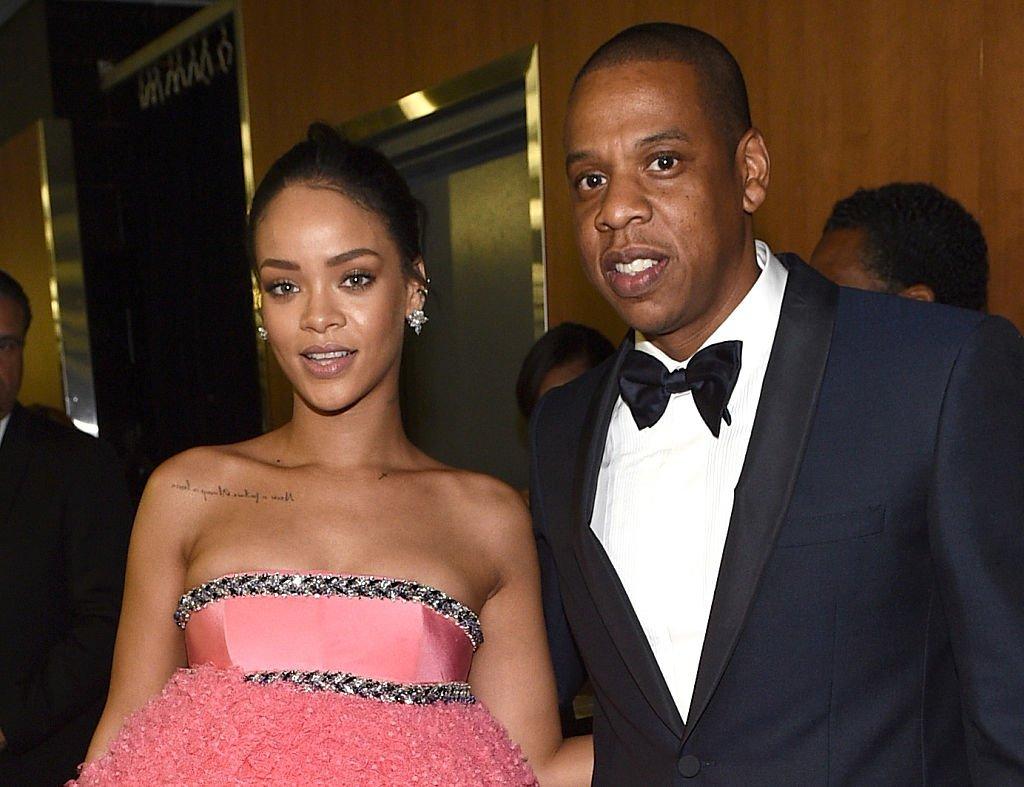
The 2009 incident between Brown and Rihanna became one of the most defining moments of celebrity scandal in modern pop history.
It reshaped public conversations about domestic violence, fame, and accountability.
It also froze all three figures in a specific moment of time.
To revisit that era now is to reopen emotional archives many thought had been sealed.
There is also an uncomfortable truth about power in entertainment.
Mentorship can be transformative.
It can also blur lines.
When a teenage artist signs to a label run by a powerful executive, the optics are inherently complex.
The industry has often celebrated such stories as fairy tales of discovery.
Rarely has it examined them under a harsher light.
Brown’s statement—if that is what it can be called—lands precisely at that intersection.
It does not accuse.
It does not clarify.
It simply implies.
And implication can be more potent than detail.
Some observers believe the comment may refer to a moment of professional alignment rather than personal intimacy.
Others argue the phrasing suggests something more charged.
Without elaboration, interpretation becomes projection.
And projection fuels controversy.
It is also worth noting that Brown did not present the moment as a revelation he had been eager to share.
By his own framing, it was a memory surfacing in retrospect.
That distinction matters.
Memory is notoriously subjective.
Time reshapes perception.
What felt incriminating in one emotional state may look entirely different years later.
Yet in celebrity culture, nuance rarely survives first contact with virality.
Music historians point out that rumors about Rihanna and Jay-Z circulated as early as 2005, shortly after her debut single.
Those rumors were denied repeatedly.
At the time, they were widely dismissed as a marketing ploy designed to generate buzz for a new artist.
Jay-Z himself once suggested that such gossip was orchestrated to spark conversation.
Whether that explanation satisfied skeptics is another matter.
Now, more than a decade later, Brown’s remark threatens to revive those early whispers with fresh oxygen.
There is a strategic element to ambiguity.
By not specifying what he “caught,” Brown avoids direct accusation while inviting inference.
It is a communication style that protects the speaker while compelling the audience to fill in blanks.
In the age of algorithm-driven outrage, blanks rarely remain empty for long.
Public relations experts suggest that the fallout may depend less on the truth of the implication and more on how—or whether—others respond.
Silence can neutralize a rumor.
It can also amplify it.
A denial can extinguish speculation.
It can also validate it by acknowledging its existence.
For Rihanna, whose brand now spans beauty, fashion, and motherhood, the stakes differ from those of her early career.
She is no longer the teenager signed to a label head’s vision.
She is an executive in her own right.
Any suggestion that revisits narratives of dependency clashes with the autonomy she has since established.
Jay-Z’s empire, meanwhile, rests on calculated composure.
Addressing a loosely framed insinuation risks dignifying it.
Ignoring it risks allowing it to metastasize online.
Brown stands in a different position.
His career has been shaped by cycles of backlash and redemption.
Every new controversy interacts with that history.
Some see his comment as bravery.
Others view it as provocation.
The truth may lie somewhere less dramatic: a man revisiting a memory in a media landscape primed for escalation.
Still, the question lingers: why now?
There is no confirmed catalyst.
No new lawsuit.
No documentary.
No leaked footage.
Just a comment that pierced the surface of a long-settled chapter.
That unpredictability makes it more potent.
Planned revelations can be managed.
Spontaneous implications are harder to contain.
In the end, what remains is not evidence but atmosphere.
A charged pause in a story people thought they understood.
A reminder that celebrity narratives are rarely linear.
They are mosaics assembled from public moments and private memories, some shared, some withheld.
Whether Brown chooses to elaborate could determine whether this becomes a fleeting headline or a sustained controversy.
For now, the ambiguity is doing the work.
It keeps the conversation alive.
It invites debate without resolution.
And in an industry built on spectacle, unresolved tension is currency.
The coming days may bring clarification.
Or they may bring silence.
Either outcome will be interpreted as meaningful.
That is the paradox of public life at this level: even restraint becomes a statement.
Until then, the phrase hangs in the air—“I caught them”—suspended between implication and accusation, between memory and narrative strategy.
It is a fragment of a story powerful enough to reignite old fault lines, yet vague enough to deny accountability.
Perhaps that is why it resonates.
Not because of what it proves, but because of what it suggests.