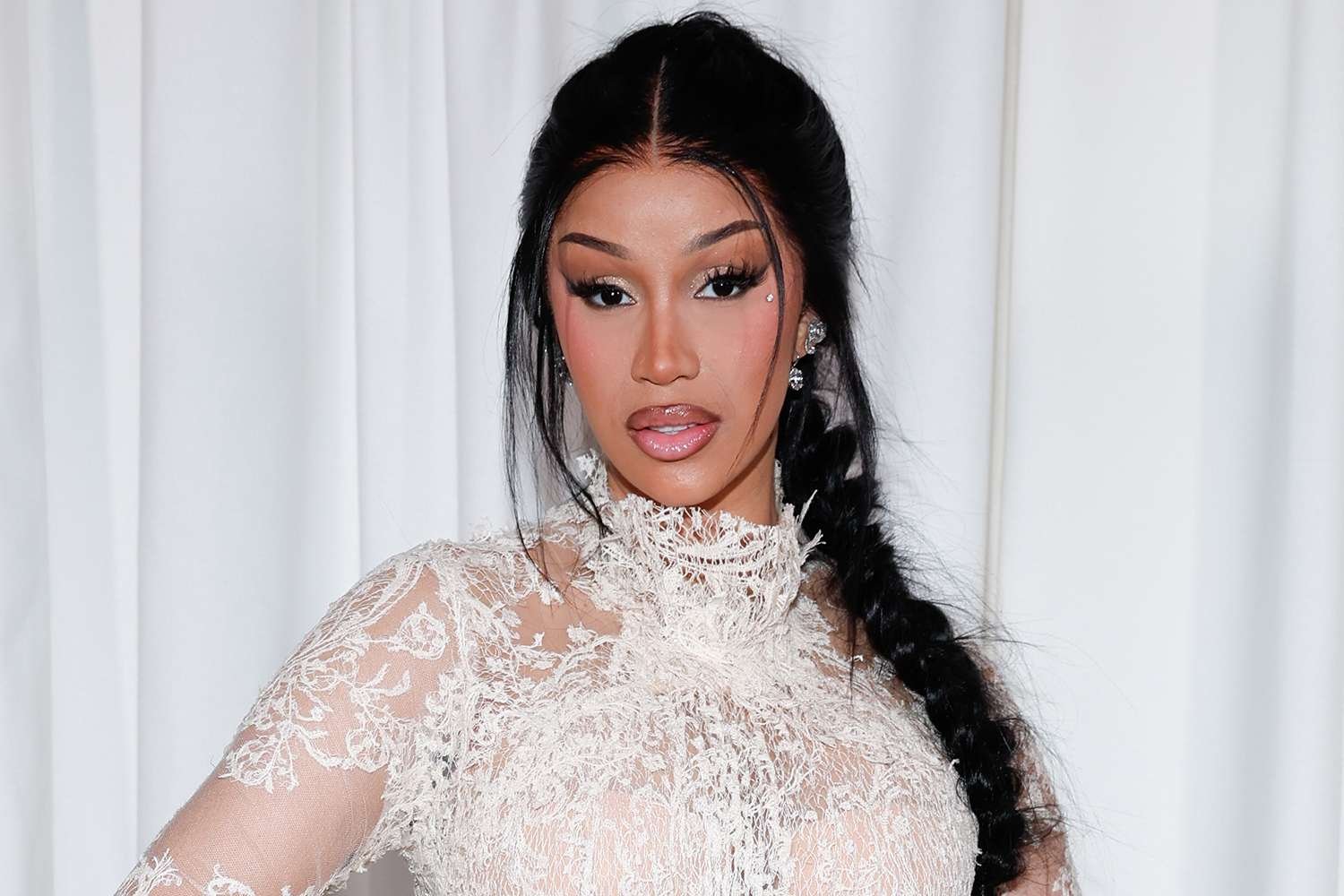

Public relationships have always fascinated people. When celebrities fall in love, build families, break up, and move on, the world doesn’t just watch — it analyzes, critiques, and often turns their lives into cautionary tales. The recent conversation surrounding Cardi B and Offset is a perfect example of how quickly a personal situation can become a broader social commentary about relationships, loyalty, and double standards.
Cardi B and Offset were not just another celebrity couple. They represented a modern, high-profile love story filled with passion, drama, reconciliation, and resilience. Over the years, fans watched them navigate marriage, parenthood, public scandals, and repeated rumors of infidelity. Despite the turbulence, they built a family together and often spoke about love, forgiveness, and growth. For many, their relationship symbolized the complicated reality of modern romance — messy but worth fighting for.
However, Offset’s repeated cheating allegations became a recurring theme in their marriage. Infidelity is one of the most painful breaches of trust in any relationship. For many people, it represents not just betrayal, but disrespect. Choosing to leave a partner because of cheating is often seen as an act of self-respect and boundary-setting. It sends a clear message: love cannot survive without trust.
When news broke that Cardi B and Offset had separated, many framed it as a woman finally choosing herself. In a culture where women are often encouraged to “hold their family together” at all costs, walking away from a marriage due to repeated betrayal can be seen as strength. It can represent growth, self-awareness, and a refusal to accept less than one deserves.
But public perception shifted once rumors began circulating that Cardi B was linked to Stefon Diggs — an NFL star who himself has been associated with dating rumors involving multiple women. Almost instantly, social media narratives took shape. Some critics pointed out what they saw as irony: leaving a husband over cheating, only to become involved with a man who allegedly entertains other women. Memes were made. Sarcastic comments spread. The situation became less about facts and more about symbolism.
This is where things get complicated.
First, rumors are not realities. Public figures are constantly surrounded by speculation. Being “linked” to someone does not automatically confirm exclusivity, commitment, or even a serious relationship. Dating after a breakup is not the same as marriage. The expectations, boundaries, and definitions are different. A single woman dating a man — regardless of his reputation — is not equivalent to being a married woman tolerating infidelity.
Second, the narrative that a woman who leaves a cheating partner only to “become a side piece” reinforces a deeply gendered double standard. When men move on quickly after a breakup, it is often normalized or even praised. When women do the same, their choices are scrutinized more harshly. Society frequently frames women’s romantic decisions as moral statements rather than personal ones.
There is also the assumption that every new relationship must be a search for a perfect replacement. Sometimes, after a painful breakup, people are not looking for permanence. They may be exploring, healing, rediscovering themselves, or simply enjoying companionship without the weight of lifelong commitment. Growth after heartbreak does not always look linear or traditional.
The viral commentary suggesting, “See how women leave their homes because their husband has side pieces to become side pieces to another man,” reduces a complex emotional journey into a punchline. Relationships are rarely that simple. People leave for many reasons — emotional exhaustion, broken trust, unmet needs, or repeated patterns that feel impossible to repair. And when they leave, they are allowed to navigate the next chapter however they choose.
There’s also a deeper psychological layer to consider. After experiencing betrayal, some individuals subconsciously gravitate toward familiar patterns. Others deliberately seek something entirely different. Neither path automatically defines their self-worth or intelligence. Healing is messy. It often involves trial and error. Sometimes it includes dating people who are not meant to stay long-term.
Another part of the viral message says, “Somebody is with your ex right now realizing why you left.” That line resonates because it speaks to a universal truth. When a relationship ends due to repeated issues, those issues rarely disappear overnight. Patterns tend to repeat unless the person responsible actively works to change them. Watching an ex move on can be painful, but it can also be validating. Over time, the same behaviors that pushed you away may become visible to the next partner.
However, turning that truth into a public spectacle — especially when children and families are involved — can be insensitive. Celebrity or not, these are real people with real emotions. Reducing their lives to memes may generate engagement, but it overlooks the human side of heartbreak.
There is also an uncomfortable pleasure that social media sometimes takes in perceived “karma.” When someone leaves a relationship and appears to enter a similarly flawed situation, observers are quick to call it hypocrisy or poetic justice. But real life is not a morality play designed for public satisfaction. People are allowed to make imperfect decisions. They are allowed to date flawed individuals. They are allowed to learn lessons in stages rather than all at once.
It’s worth asking why society is so invested in proving that someone made the “wrong” choice. Perhaps it reflects our own fears about relationships. If a wealthy, successful, powerful woman can struggle with loyalty and trust in love, what does that say about the rest of us? Sometimes criticism is less about the celebrity and more about projecting our anxieties onto their story.
At its core, this situation highlights the fragile balance between accountability and judgment. It is fair to discuss patterns of behavior. It is fair to acknowledge irony. But there is a difference between commentary and condemnation. The phrase “We listen and we don’t judge” has become popular precisely because people are exhausted by constant online moral policing.
Relationships are complex ecosystems shaped by personality, history, trauma, desire, and circumstance. Outsiders see headlines. Insiders experience nuance. What looks like contradiction from afar may feel entirely different from within.
Ultimately, the real lesson is not about choosing one man over another. It is about autonomy. Choosing to leave a marriage due to cheating is a boundary. Choosing to date again afterward is a right. Whether that next relationship succeeds or fails does not invalidate the original decision to walk away.
And perhaps the most humbling reminder is this: somewhere, someone may indeed be with your ex right now, slowly discovering the patterns you once endured. Not as revenge. Not as karma. Just as the natural unfolding of behavior over time.
We can observe. We can reflect. But in the end, the healthiest stance might truly be this: we listen — and we don’t judge.