It was a cold afternoon in São Paulo. The noise of traffic and honking horns filled the avenue as billionaire Pedro Monteiro stepped out of his black car for a short walk.
He had just left a tense meeting—his head full of numbers, deadlines, and decisions—when a faint cry broke the city noise.
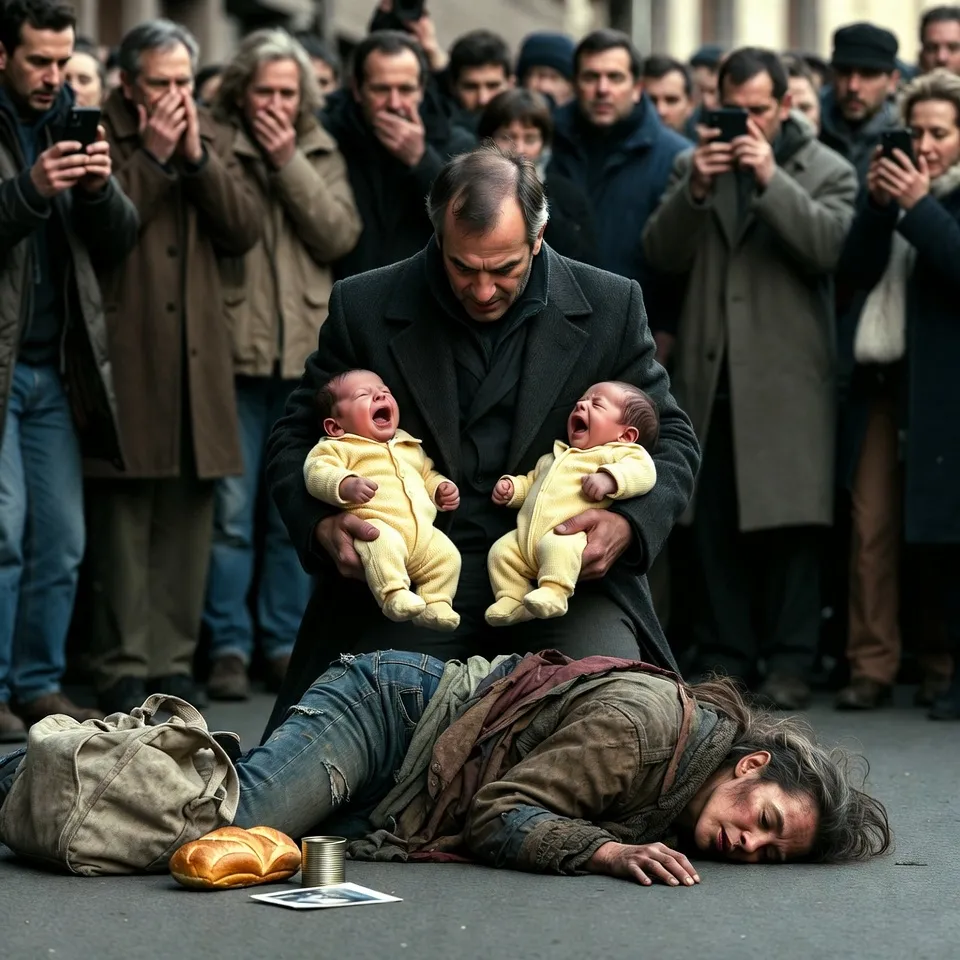
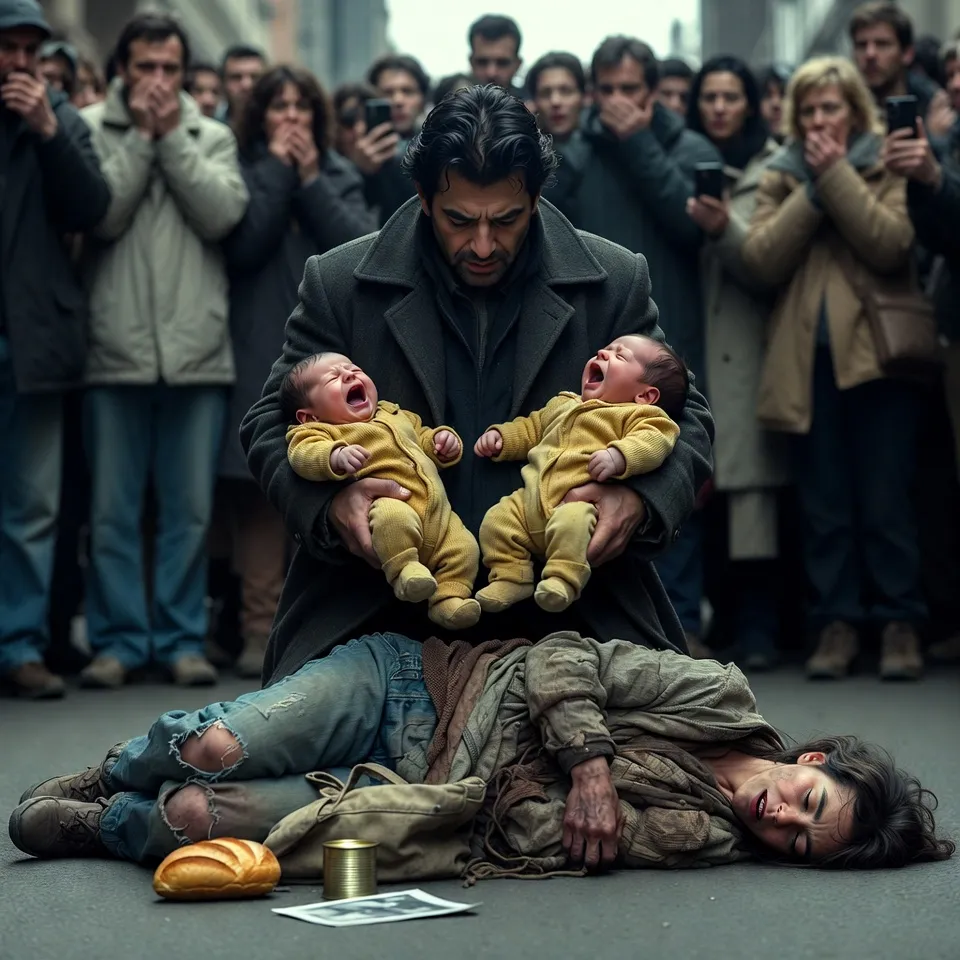
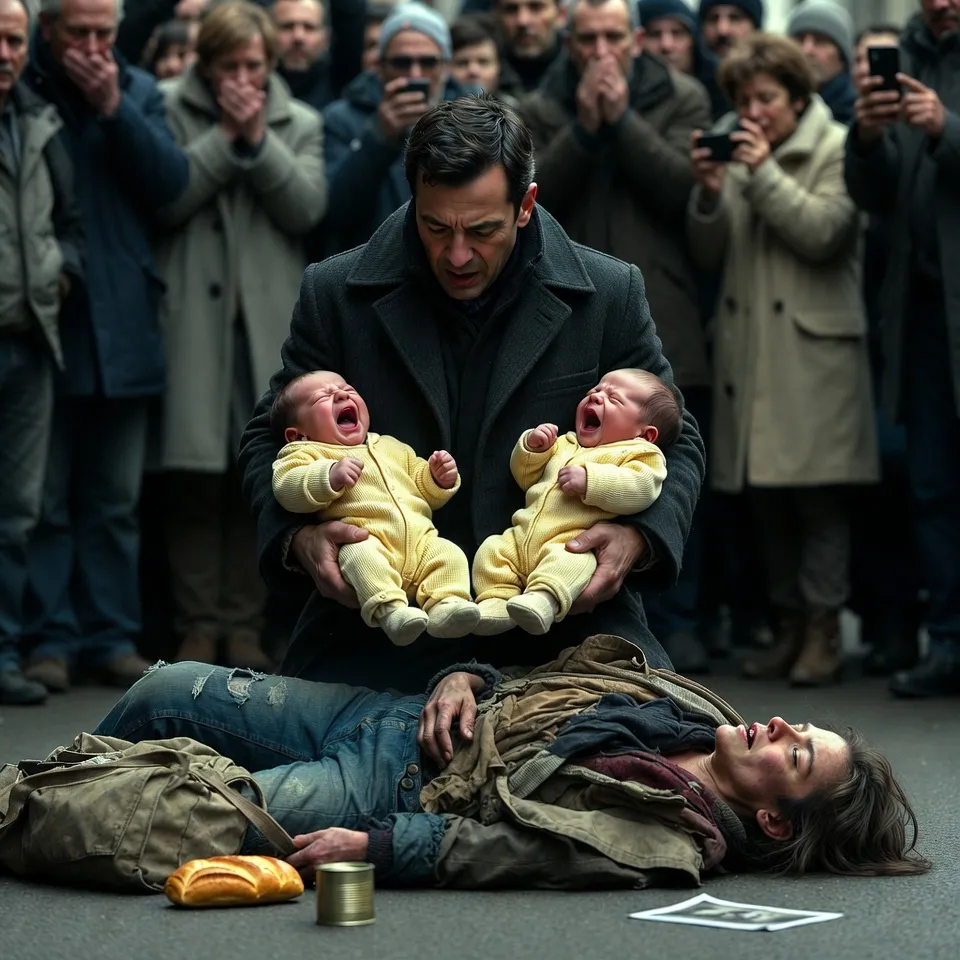
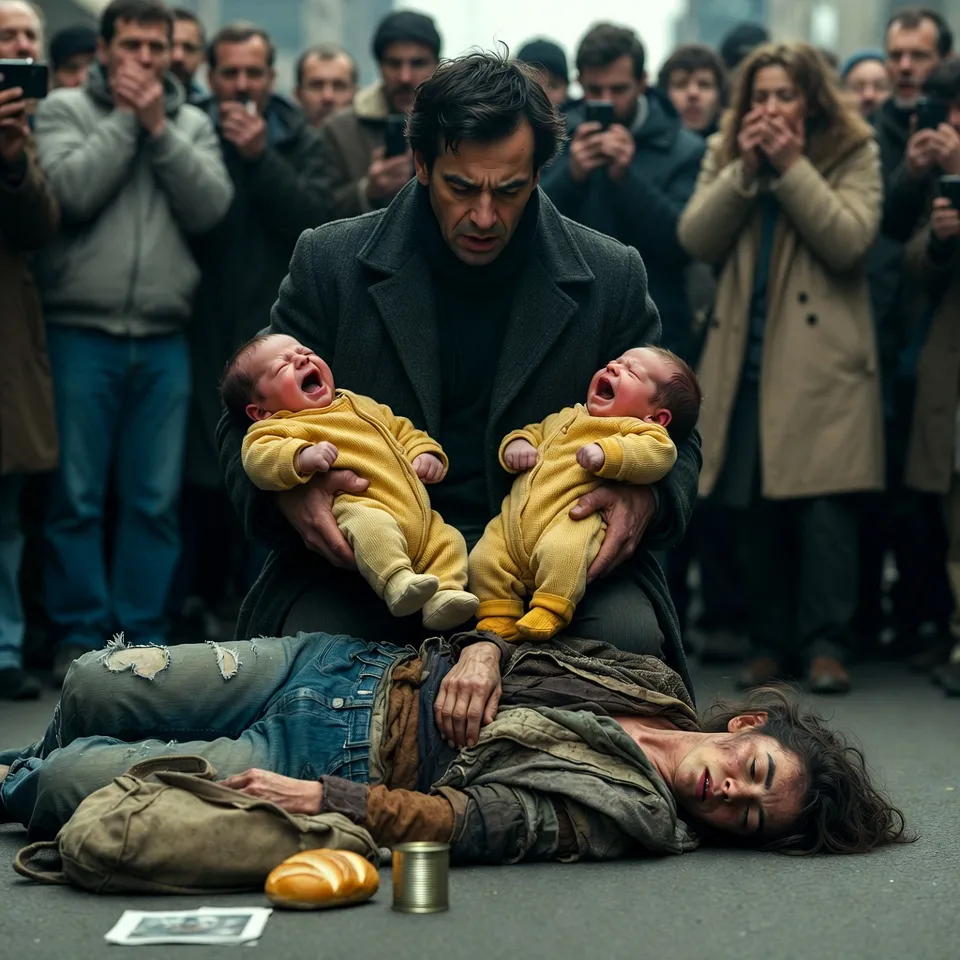
On the sidewalk, a woman lay slumped, pale and trembling, a worn bag beside her. Behind her, two twin babies cried desperately, tugging at their mother’s sleeve, trying to wake her.

Without a second thought, Pedro ran toward them.
“Ma’am, can you hear me?” he asked, kneeling beside her.
There was no response. He took off his jacket and carefully covered her shoulders as a small crowd began to gather.
But when he looked at the babies, Pedro froze.
They had the same blue eyes as him. The same brown hair. Even the same dimple on his left cheek that he’d had since childhood.
It was like looking at two tiny versions of himself.
A few minutes later, the ambulance arrived, and the paramedics placed the woman on a stretcher.
When they asked who would take care of the children, the twins clung to Pedro’s legs and began to cry even louder.
“Sir,” one of the paramedics said quietly, “it seems they know you.”
As the ambulance drove away, Pedro stood there, motionless in the middle of the street, holding the two babies in his arms, surrounded by flashes of onlookers—the millionaire in an impeccable suit, embracing two children of a stranger… identical to him.
That night, Pedro couldn’t sleep. The image of those faces—his own reflection—haunted him. The next morning, he called his lawyer.
“Find out who that woman is. Now.”
Pedro remained at the hospital long after visiting hours had ended. The corridor lights hummed softly, and the city outside continued its restless pulse, unaware that his entire world had shifted in a single afternoon.
For the first time in decades, his phone lay untouched in his pocket. No calls to investors. No messages from executives. No urgent meetings demanding his attention.
Only the steady rise and fall of two tiny chests, sleeping peacefully in a shared hospital crib.
The next days unfolded like a reckoning. Pedro arranged private care for Camila, insisting she receive the best doctors, nutrition, and support.
But he made no grand speeches and issued no press releases. This was not an act of charity. It was an act of responsibility.
May you like




Camila remained cautious. Years of struggle had carved a quiet strength into her, and trust did not come easily.
She listened as Pedro spoke—not as a billionaire, but as a man stripped of certainty—admitting his absence, his cowardice, and the choices he could never undo.
“I don’t expect forgiveness,” he told her one evening, his voice low. “I only ask for the chance to do right by them. Every day. For the rest of my life.”
When the twins were discharged, Pedro did something no boardroom had ever required of him.
He cleared his calendar indefinitely.
He moved them into a modest apartment near the hospital, not one of his luxury penthouses. Camila chose it herself. Pedro agreed without question.
He learned quickly how helpless wealth could be in the presence of real life. Money could buy formula, cribs, and doctors—but it could not calm a fever at three in the morning. It could not stop the crying, nor replace the patience required to rock a child back to sleep.
Pedro learned anyway. He fumbled with diapers. He burned his first attempt at cooking. He held his sons during sleepless nights, whispering promises he prayed he would keep.
Outside, rumors began to circulate. Photos from that afternoon surfaced online—him kneeling in the street, holding two babies. Speculation grew, but Pedro refused interviews and declined statements.
This story did not belong to the public.
Weeks later, Camila stood at the apartment window, watching Pedro help the twins take their first unsteady steps across the living room floor.
For the first time since São Paulo had nearly swallowed her whole, she allowed herself to breathe.
She had not been rescued. She had survived.
And now, for better or worse, they were building something fragile and real—together.
Pedro understood that his legacy would no longer be measured in numbers or towers that scraped the sky. It would be measured in bedtime stories.
In scraped knees. In showing up, even when it was inconvenient or hard.
Some destinies arrive quietly. Others crash through your life, crying, small, and impossible to ignore.
That cold afternoon in São Paulo did not ruin Pedro Monteiro’s life.
It finally gave him one worth living. Hours later, the report arrived.
Her name was Camila Duarte—a former employee of his company who had disappeared five years ago without a trace. Pedro felt the ground crumble beneath his feet. He remembered her.
A dedicated, sweet young woman… and a brief romance he had chosen to forget.
When he arrived at the hospital, he found Camila awake, but weak, her eyes filled with tears. She looked at him in silence—a heavy silence, full of answers he didn’t want to hear.
In her arms, the twins slept peacefully, oblivious to the turmoil surrounding them.
Pedro swallowed. “Are they… my children?” he asked, his voice trembling. Camila nodded, letting the tears stream down her face.
“I tried to tell you… but I was fired before I could. After that, I didn’t want anything from you. I just raised my children with what little I had.”
Pedro knelt beside the bed, speechless. All his fortune, his power, and his prestige were worthless compared to those two little lives—the ones he never knew existed.
In that instant, he understood that fate had stopped him on that sidewalk for a reason.
And for the first time in many years, Pedro Monteiro wept.
Because, amidst the concrete and chaos of São Paulo, he hadn’t just found a woman in distress. He had found the truth, regret… and the children that time had hidden from him.