Was Tupac “Erased” From the Diddy Documentary? Katt Williams Reveals the Shocking Scene Netflix Allegedly Cut
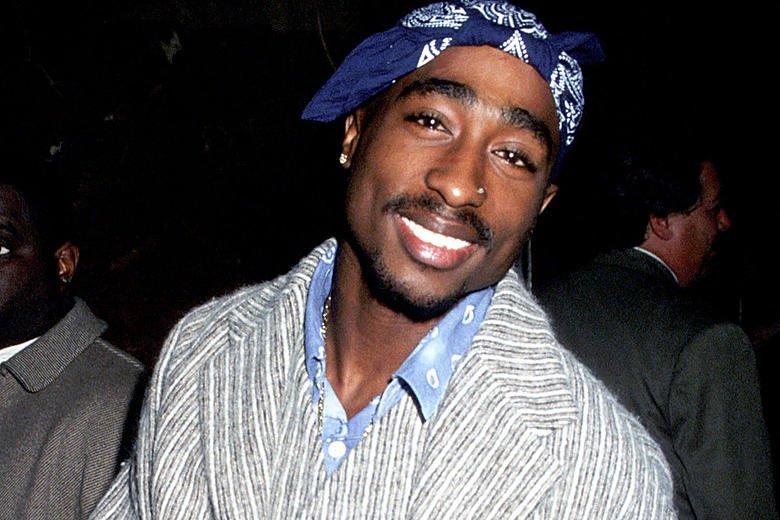
The name Tupac Shakur has never faded into silence.
Nearly three decades after his death, it still moves through the culture like a low, constant rumble—sometimes distant, sometimes deafening.
But in recent weeks, that name resurfaced in a place few expected: inside a documentary centered on Sean “Diddy” Combs—and then, just as suddenly, it was gone.
What remains is not a scene, not a quote, not even a blurred frame.
What remains is an absence.
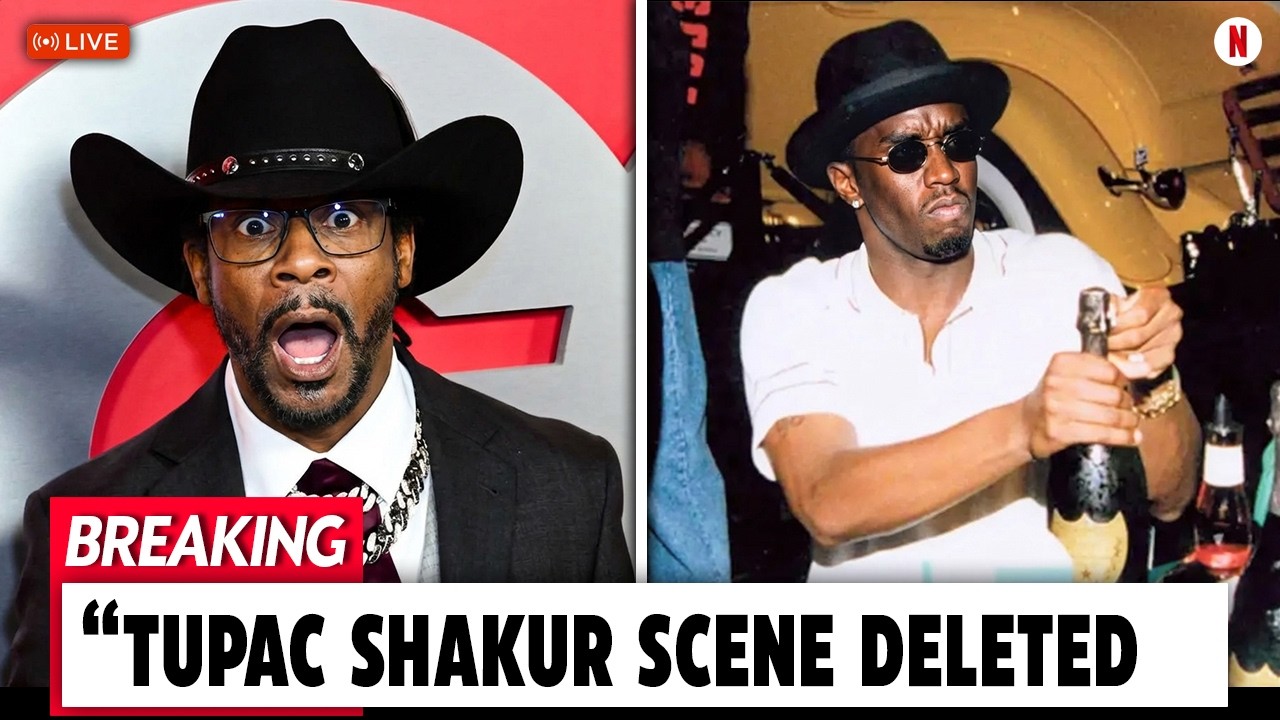
The controversy ignited after Katt Williams made a pointed remark during a conversation that quickly spread across social media.
Known for his sharp tongue and willingness to step where others hesitate, Williams suggested that a segment referencing Tupac had originally been part of the documentary’s early cut.
According to him, the footage didn’t merely allude to history.
It allegedly touched on sensitive territory—territory that, depending on who you ask, may still be too volatile to explore openly.
The documentary in question was marketed as a revealing look into Diddy’s career, influence, and legacy.
It promised insight, context, and unfiltered storytelling.
Viewers expected glamour, power moves, industry politics, and perhaps a few uncomfortable truths.
What they did not expect was a rumor that a key piece of narrative—one potentially tied to one of hip-hop’s most enduring mysteries—had been removed before the public ever pressed play.
Netflix has not issued a statement addressing the claim.
No confirmation.
No denial.
Just silence.
In the age of instant clarification and carefully worded press releases, silence can feel louder than any response.
The streaming giant is no stranger to controversy, nor is it unfamiliar with the delicate balancing act required when powerful figures and unresolved histories collide.
Editing decisions happen all the time.
Scenes are trimmed for pacing, tone, or legal concerns.
But when the name “Tupac” is involved—especially in proximity to Diddy—routine edits begin to look like something else.
For decades, speculation has surrounded the East Coast–West Coast rivalry that defined 1990s hip-hop.
Tupac’s murder in 1996 remains one of the most scrutinized and debated crimes in music history.
Countless documentaries, books, and investigative specials have attempted to reconstruct timelines, motives, alliances, and betrayals.
Theories have flourished in the vacuum left by unanswered questions.
In that context, any new footage referencing Tupac—particularly within a narrative orbiting Diddy—would inevitably attract attention.
So what exactly was in this alleged missing scene?
That is the question driving online debates into overdrive.
Some speculate the segment may have revisited old tensions, revising them through a modern lens.

Others believe it could have included commentary or archival material that reframed familiar events in an unexpected way.
A more cautious camp suggests the scene might have featured third-party allegations, perhaps deemed too legally complex to withstand scrutiny.
And then there are those who lean into the most dramatic interpretation: that the footage hinted at connections or perspectives that powerful stakeholders would prefer remain off-screen.
None of these possibilities have been substantiated.
And yet, the mere suggestion that something was removed has proven enough to reignite conversations many assumed had settled into history.
Katt Williams did not offer granular detail.
He did not release clips or provide timestamps.
What he delivered instead was implication.
A tone.
A carefully weighted suggestion that audiences were not seeing the full picture.
For a comedian whose career has often blurred the line between humor and cultural critique, the comment felt less like a punchline and more like a warning.
Why speak now? Why reference a cut scene without presenting evidence?
Supporters argue that Williams has a history of challenging powerful institutions and questioning narratives others accept without hesitation.
Critics counter that ambiguity fuels clicks, not clarity.
Between those positions lies a murky middle ground where entertainment, activism, and speculation intertwine.
The timing adds another layer.
Diddy himself has faced renewed scrutiny in recent months unrelated to the documentary, drawing fresh attention to his past and associations.
In such an environment, even peripheral rumors can gain traction quickly.
A missing scene—real or exaggerated—becomes symbolic.
It represents the possibility that stories are still being curated, shaped, or shielded.
Industry insiders, speaking anonymously in various online forums and podcasts, have offered measured reminders that documentaries undergo multiple revisions before release.
Legal teams review content.
Rights clearances shift.
Interviews fall through.
Archival footage can be withdrawn at the last minute.
From this perspective, a removed segment may reflect nothing more than practical reality.
Yet the emotional weight attached to Tupac’s legacy makes the situation different.
Tupac is not merely an artist in the cultural memory.
He is a symbol—of artistic defiance, of unresolved conflict, of a moment when hip-hop’s commercial ascent intersected with real-world violence.
To suggest that new material connected to him was cut from a high-profile documentary is to reopen a vault of unresolved feelings.
And then there is Diddy’s position within that era’s history.

As a defining figure of the East Coast scene, his name has long been intertwined with narratives of rivalry, ambition, and tragedy.
Over the years, he has publicly addressed aspects of that period, expressing regret over the hostility that once defined the industry.
The documentary was widely anticipated as an opportunity to contextualize those years through his perspective.
If a Tupac-related segment existed, its tone would have mattered.
Was it reflective? Defensive? Accusatory? Neutral? Each possibility carries different implications.
Each would shape audience interpretation in subtle but significant ways.
Without footage, viewers are left with conjecture.
Netflix’s refusal to engage publicly may be strategic.
Addressing the rumor risks amplifying it.
Ignoring it may allow it to fade.
But as social media users dissect old interviews, resurface archival clips, and compare early promotional materials to the final cut, the narrative refuses to disappear quietly.
The phenomenon speaks to a broader cultural shift.
Audiences no longer passively consume media; they investigate it.
They track edits.
They archive deleted posts.
They crowdsource timelines.
In this landscape, the absence of a scene becomes content in itself.
Some observers caution against conflating speculation with fact.
They note that no independent source has confirmed the existence of a Tupac-focused segment in any pre-release version.
Others insist that insiders have quietly acknowledged changes.
Without documentation, the truth remains elusive.
Meanwhile, Katt Williams’ comment continues to circulate, clipped into short viral segments, framed with dramatic captions, and debated in comment sections that stretch for thousands of lines.
For some viewers, his words validate long-held suspicions about selective storytelling in mainstream platforms.
For others, they represent another example of rumor outpacing evidence.
What is undeniable is the reaction.
Within hours of the remark gaining traction, searches related to Tupac, Diddy, and the documentary spiked.
Online forums revisited decades-old theories.
Podcast hosts dedicated entire episodes to analyzing what might have been removed.
The story fed on itself, expanding beyond its original spark.

In a media ecosystem driven by engagement, mystery can be more powerful than revelation.
A confirmed scene would be dissected, debated, and eventually archived.
A missing one lingers.
Perhaps the most intriguing aspect is not whether the scene existed, but why the possibility resonates so strongly.
It suggests that audiences remain unconvinced they have heard the full story of the 1990s hip-hop era.
It reflects an ongoing distrust of curated narratives, particularly when they involve powerful figures and unresolved tragedies.
If the segment was indeed cut for legal or editorial reasons, it would not be unprecedented.
If it never existed in the form described, the rumor itself becomes a commentary on collective memory and suspicion.
Either way, the controversy underscores how fragile public trust can be.
For now, the documentary streams unchanged.
The timeline remains as presented.
Tupac’s name appears in history, as it always has, but not in the way some now imagine it might have.
And that imagined absence continues to grow.
Until footage surfaces, or an official clarification emerges, the debate will likely persist in that uneasy space between fact and inference.
In that space, questions multiply faster than answers.
Why was the comment made? Who benefits from the ambiguity? What does it reveal about how stories are shaped in the streaming era?
In the end, the most powerful image may not be a dramatic confrontation or a shocking revelation.
It may be an empty space—an unseen scene that viewers cannot analyze because they never had the chance to see it.
Sometimes what captures the public imagination most is not what is shown, but what might have been.