At first glance, it sounds backwards.
If you’re auditioning for American Idol while Carrie Underwood is sitting behind the judges’ table, you might assume that singing your own original song would give you an edge. After all, originality is currency in modern music, and Carrie herself is a songwriter who built a career on authenticity.

But according to Underwood, that assumption might actually work against you.
As American Idol kicks off its 24th season, Carrie returns for her second year as a judge alongside longtime panelists Luke Bryan and Lionel Richie. It’s a full-circle moment for Underwood, who famously won the competition in 2005. Nearly two decades later, she’s now on the other side of the table — and her perspective on auditions is more pragmatic than many would expect.
During a recent interview, Carrie was asked whether contestants gain an advantage by performing original songs rather than covers, especially during early auditions. In recent years, more hopefuls have taken that risk, believing it helps them stand out.
Carrie’s answer was candid.
She actually prefers covers.
Not because she dislikes originality — but because of how the human brain works in a judging environment.
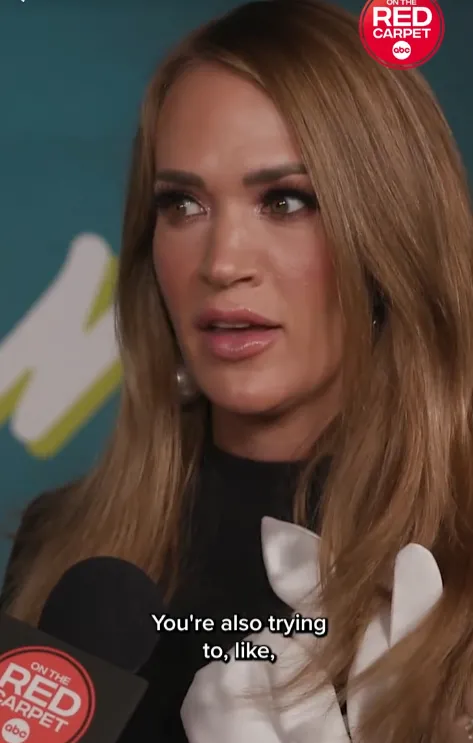
“When you’re listening to a lot of originals,” Carrie explained, “you’re not just judging their voice. You’re also trying to figure out the song.”
That split focus matters.
In the fast-paced audition setting, judges are processing hundreds of performances in rapid succession. When a song is unfamiliar, part of the brain is occupied just trying to understand melody, structure, and lyrics — which leaves less mental space to evaluate the most important thing: the voice.

After what she jokingly referred to as “the bazillionth original song,” Carrie admitted it becomes harder to stay locked in on vocal quality alone.
She compared the experience to attending a concert by an artist you love — only to realize they’re performing nothing but songs from an unreleased album.
“You paid your money to hear the hits,” she said. “And they’re not doing any of them.”
That analogy landed.
For Carrie, one of the most compelling moments on American Idol is when a contestant completely nails a song the judges already know and love. Familiarity creates a clear baseline. If the performance elevates the song — or makes her feel something new — that’s when it becomes powerful.
“That makes me want to vote for them even more,” she admitted.
From the viewer’s perspective at home, auditions may appear smooth and polished. But in real time, they’re intense, fast-moving, and emotionally dense. What looks like bold originality on TV can feel like cognitive overload in the room.
That said, Carrie did acknowledge an important exception.
Earlier this season, 25-year-old contestant Hannah Harper performed an original song titled “String Cheese.” Before singing, Hannah explained that the song was inspired by her experience with postpartum depression after having three children — and a quiet moment when her young son asked her to open a piece of string cheese, reminding her she was exactly where she needed to be.
The song wasn’t just original.
It was grounded. Personal. Clear.
As Hannah sang, Carrie — herself a mother of two boys — visibly connected to the story. She became emotional, shedding tears during the audition.
It was a reminder that originality can work — but only when the song carries a story strong enough to cut through the noise.
The takeaway isn’t that original songs are wrong.

It’s that they’re risky.
A great cover lets judges evaluate a voice instantly. An original demands that the song, the story, and the performance all land at once.
When they do, the moment is unforgettable.
When they don’t, the voice can get lost.
And that’s the quiet truth behind Carrie Underwood’s surprising advice — not about playing it safe, but about knowing exactly what the judges are listening for when the room is already full.