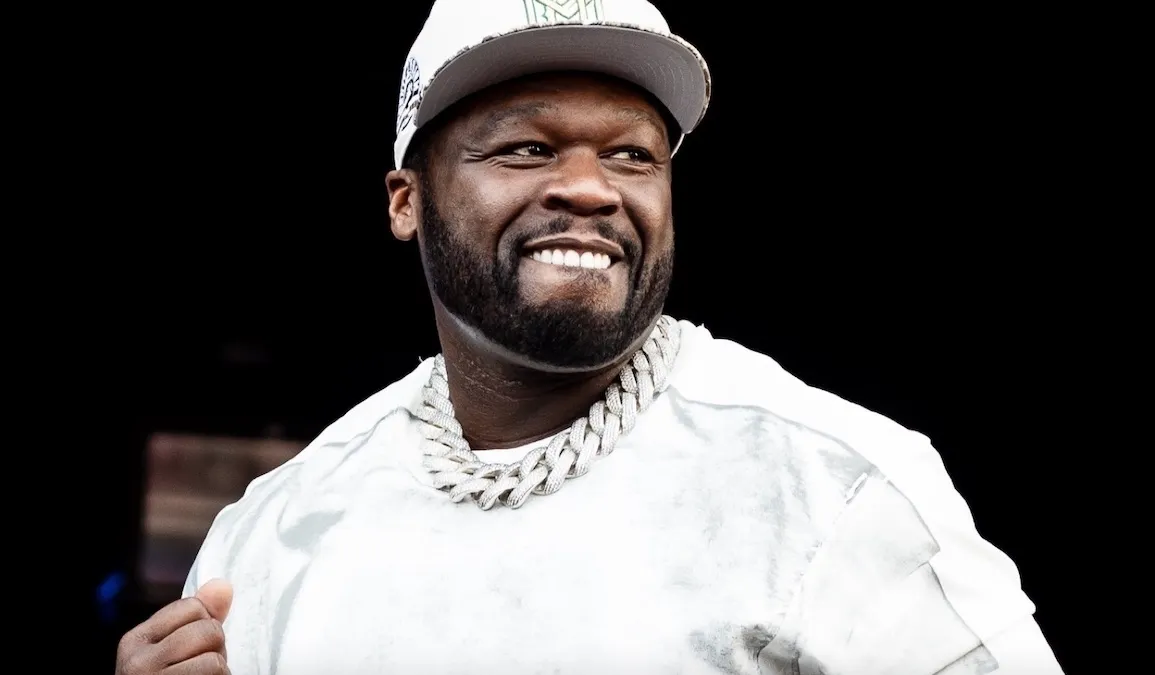
50 Cent Warns LeBron: “Run While You Still Can” – What Forced Him to Speak Out?
In the age of viral headlines and weaponized screenshots, it sometimes takes only a single sentence to ignite a firestorm.
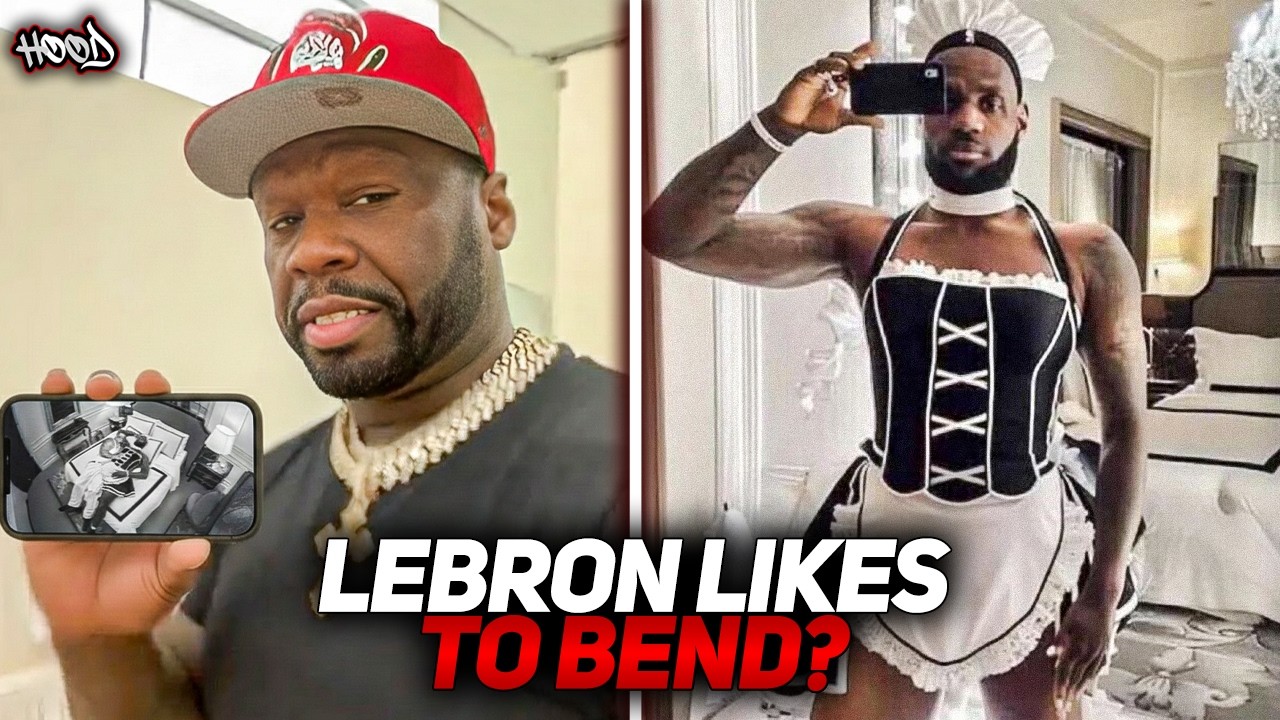
This week, that sentence came from 50 Cent, and the name orbiting around it was LeBron James.
What might have once been dismissed as celebrity banter quickly spiraled into something heavier, darker, and far more unsettling—especially after another name surfaced in the same breath: Jeffrey Epstein.
It began quietly.
A post.
A comment.
A tone that didn’t quite match the usual rhythm of online teasing.
50 Cent has built a reputation on calculated provocation; he understands controversy the way seasoned chess players understand sacrifice.
But observers noted that this time, there was no punchline.
No promotional hook.
No album rollout hiding behind the smoke.
Instead, there was a warning—short, sharp, and cold: “Run while you still can.”
Within minutes, screenshots spread like sparks in dry grass.
The phrasing felt deliberate.
Not comedic.
Not exaggerated for effect.
The ambiguity only intensified the reaction.
Run from what? From whom? And why now?
Social media dissected every syllable.
Some fans insisted it was nothing more than layered humor—another chapter in hip-hop’s long tradition of public sparring.
Others weren’t so sure.
Because when LeBron James is mentioned in the same narrative thread as Jeffrey Epstein, even indirectly, the temperature changes.
Epstein’s name, years after his death, continues to evoke unresolved questions, sealed documents, and a list of powerful figures whose associations remain the subject of endless speculation.
No new evidence was presented in this latest exchange.
No formal accusations were made.
Yet the mere proximity of those names was enough to push the story beyond entertainment.
Industry insiders privately admit that timing is rarely accidental in high-profile commentary.
The sports world is entering a sensitive phase.
LeBron’s influence stretches far beyond basketball—business ventures, media projects, political statements, philanthropic initiatives.
He is not just an athlete; he is an institution.
Any shadow cast in his direction, no matter how faint, travels fast.
What makes this episode particularly combustible is 50 Cent’s history.
He has positioned himself as someone who speaks bluntly, sometimes recklessly, but often with the confidence of a man who believes he knows more than he says.
His past clashes have rarely been random; they tend to surface at moments when public attention is already fragile.
Observers question whether this is strategic leverage, personal grievance, or something more layered.
LeBron, for his part, has not publicly responded to the warning.
Silence, in moments like these, becomes its own headline.
Communications experts often advise high-profile figures to avoid amplifying ambiguous commentary.
But silence can also breed speculation.
Every hour without clarification becomes a canvas for imagination.
Meanwhile, online forums have exploded with theories.

Some users argue that invoking Epstein’s name is a rhetorical tactic designed to provoke outrage without crossing legal lines.
Others interpret the warning as metaphorical—perhaps about shifting alliances, business risks, or unseen pressures within elite circles.
A smaller but vocal group suggests that the message carries weight precisely because it lacks specifics.
Vague warnings can be more destabilizing than direct accusations; they invite the public to fill in the blanks.
It is important to note that there is, at present, no verified information linking LeBron James to any criminal conduct related to Epstein.
No charges.
No confirmed investigations.
The speculation lives almost entirely in the realm of insinuation.
Yet in the digital age, insinuation can travel just as far as fact.
The cultural impact of this moment speaks to something deeper than celebrity drama.
It highlights how reputations are now shaped not only by actions but by associations—real or implied.
The mere mention of a controversial figure can ripple through stock valuations, endorsement deals, and global brand strategies.
Corporate partners monitor social media sentiment in real time.
Investors read between the lines.
Public relations teams prepare contingency statements before crises fully form.
And still, the original question lingers: why would 50 Cent issue a warning framed in such ominous language? If it was satire, why remove the humor? If it was strategy, what is the endgame? Some speculate that the warning could relate to business entanglements unknown to the public.
Others suspect a deeper rivalry cloaked in coded speech.
There are even whispers that the message is less about the past and more about something imminent.
Patterns matter.
Historically, explosive revelations rarely arrive without tremors beforehand.
Sometimes those tremors come in the form of cryptic posts, subtle distancing, or sudden shifts in alliances.

Whether this moment represents a genuine tremor or merely a gust of manufactured drama remains unclear.
What cannot be denied is the speed at which narratives now crystallize.
Within hours, hashtags trended globally.
Commentators on sports networks cautiously referenced the controversy without repeating the most provocative claims.
Podcasts rushed emergency episodes dissecting tone and timing.
Legal analysts reminded audiences that implication is not evidence.
The story evolved in layers, each retelling sharpening or softening the edge depending on the storyteller.
There is also the psychological dimension.
Public figures operate under immense scrutiny; even unfounded rumors can exact a cost.
Trust, once shaken, is difficult to restore.
The Epstein saga left an enduring scar on public consciousness precisely because so many questions remain unanswered.
When that name surfaces again, even tangentially, it triggers a collective reflex.
Critics argue that leveraging such associations irresponsibly erodes the line between accountability and spectacle.
Supporters of 50 Cent counter that he has a history of calling out hypocrisy within elite networks.
Both perspectives coexist in a volatile digital ecosystem where outrage fuels engagement and engagement fuels revenue.
Behind closed doors, advisors likely weigh options.
Confrontation could escalate the story.
Silence could allow it to dissipate—or to fester.
A carefully worded denial might calm some audiences while provoking others.
In high-stakes reputational management, every move carries risk.
There is also the broader context of celebrity power.
LeBron James has been vocal on social issues, positioning himself as more than an athlete.
With that expanded platform comes expanded vulnerability.
Detractors watch closely for inconsistencies.
Allies expect transparency.
The higher the pedestal, the longer the shadow.
At this stage, the narrative remains built on suggestion rather than substantiation.
Yet suggestion can be potent.
History offers countless examples of careers altered not by convictions but by perception.
Markets react to rumors.
Fans react to emotion.
Algorithms reward controversy.
Perhaps the most telling aspect of this episode is how quickly it shifted from a single comment to a multi-layered cultural debate.
It became a mirror reflecting public distrust in institutions, fascination with elite networks, and hunger for hidden truths.
Whether or not any deeper revelation emerges, the impact of the insinuation itself has already been felt.
In the coming days, clarity may surface—or the story may fade, replaced by the next viral spark.
But for now, the warning hangs in the air: “Run while you still can.” It is a phrase that suggests urgency, danger, and knowledge left unsaid.
Was it theatrics? A calculated move in a larger chess game? Or a signal that something behind the curtain is shifting?
Until concrete information replaces speculation, the tension will persist in that uncertain space between rumor and reality.
And in that space, where influence meets ambiguity, even a single sentence can echo louder than a thousand confirmed facts.