Fifty Cent is wasting no time lighting a match under hip-hop’s most carefully managed mystique. After a fresh wave of Jeffrey Epstein-related court documents and online chatter sent social media into overdrive, the Queens rapper-turned-media mogul jumped onto Instagram and announced he’s developing a new documentary centered on Jay-Z—then dared anyone to try to stop him.
In true 50 fashion, it wasn’t subtle, it wasn’t cautious, and it wasn’t framed as a polite “we’re looking into it.” It was a public provocation, posted for millions to see, at the exact moment the internet was most primed to spiral.
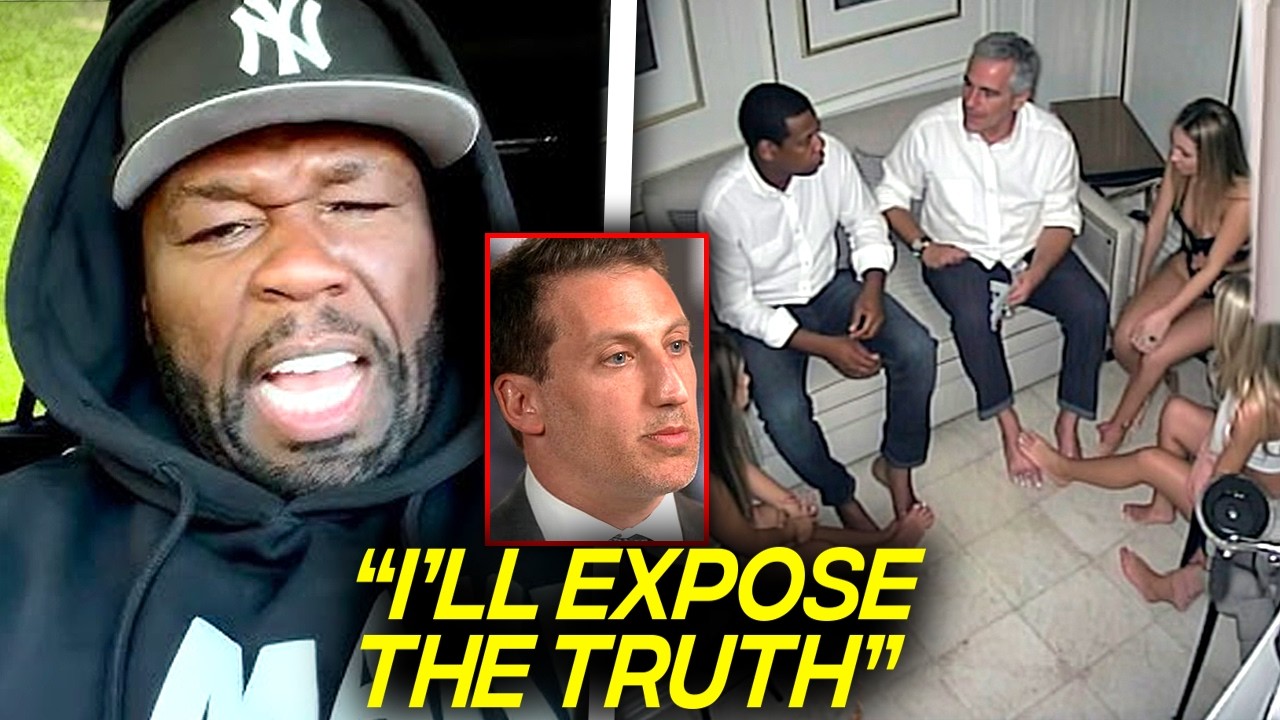
“Damn, they got you man… Jay and Epstein files. I got to do a doc on this ish.”
The post instantly detonated across fan accounts and gossip pages, where screenshots circulated faster than context. And almost as quickly, rumors began to swirl that Jay-Z’s legal team was prepared to respond with threats of litigation if 50 Cent’s project crossed the line from commentary into defamation.
Neither side has released a detailed statement confirming the specifics, but insiders and entertainment blogs are portraying it as the opening salvo in what could become a messy, high-profile legal clash. If there’s one lesson the culture has learned about Curtis “50 Cent” Jackson, it’s that he rarely backs away from a fight—especially when the fight is public.
For Jay-Z, whose brand has long been built on power, privacy, and precision, the timing is brutal. Epstein’s name is radioactive, the documents are deeply sensitive, and public trust is thin when accusations involve famous men and sealed files.
Still, it’s crucial to separate what is documented from what is implied, and what is alleged from what is proven. Being “named” in a large set of filings can mean many things—from a passing reference to a direct claim—and the mere appearance of a celebrity’s name does not establish wrongdoing.
But nuance is not what thrives online, and this story is moving at algorithm speed. Once the phrase “Epstein files” appears next to a megastar’s name, the court of public opinion tends to skip straight to verdicts.
According to the narration circulating in viral clips and reposted transcripts, Jay-Z’s name is discussed alongside other powerful figures, and the chatter often jumps to a different disgraced name: Harvey Weinstein. Some online commentators have claimed that the documents link Jay-Z to Weinstein socially, alleging that they spent time in similar circles and that Jay-Z may have witnessed troubling behavior without intervening.
Those claims remain unverified in the way they’re being presented across social media, and Jay-Z has not been charged with crimes in connection with Epstein. Yet the combination of Epstein, Weinstein, and a global superstar is enough to trigger panic among publicists and legal teams alike.
A particularly disturbing allegation being circulated involves a woman who, in the retold version spreading online, is described as contacting federal authorities and identifying herself as a victim of sexual assault by Epstein and others. The retelling claims she described waking up in a room where Jay-Z and Weinstein were present and that she alleged assault occurred while Jay-Z was there.
The allegation is explosive—and precisely the kind of claim that demands careful handling and verification, because reputations can be destroyed in a headline even if the underlying story is later disputed. In the current public debate, some readers treat the allegation as confirmation, while others dismiss it as internet hysteria and misinterpretation of documents.
What’s clear is this: 50 Cent is leaning into the chaos. And he’s doing it with a producer’s confidence—hinting that if there’s smoke, he plans to show the audience the fire, on camera, with receipts, interviews, and dramatic music cues.
And he’s not acting like a man intimidated by legal threats. If anything, he seems to be baiting them.
“Tell them I have the best lawyers.”
That posture matters because 50 Cent is not only a rapper with a phone. He has built a second career in television and film production, with a proven ability to turn scandal-adjacent narratives into bingeable entertainment.
In other words, this isn’t just a celebrity argument. It’s a potential content war—one that could blur the line between investigative storytelling and tabloid spectacle.
And for Jay-Z, the stakes are obvious. He’s not just a musician; he’s a billionaire businessman, a brand architect, and a symbol of elite access. Anything that drags his name into the Epstein orbit—even if ultimately unsubstantiated—creates reputational damage that money can’t easily erase.
Online, the conversation has widened far beyond Epstein. Once 50 Cent tossed the first grenade, commentators began resurfacing older accusations, old industry rumors, and prior civil lawsuits that have floated around hip-hop circles for years.
One flashpoint includes references to a lawsuit linked in gossip coverage to Sean “Diddy” Combs, and claims that other celebrities were mentioned in filings or narratives tied to alleged parties and misconduct. In the most viral retellings, Jay-Z and Beyoncé are described as being present in a room during a bizarre incident described by a plaintiff.
It’s important to note: the way social media summarizes lawsuits is often sloppy, sensationalized, and sometimes flat-out wrong. Allegations in a complaint are not findings of fact, and being mentioned does not equal liability.
Still, the quotes being shared are the kind that make people stop scrolling. In one retold scene, Beyoncé is attributed with a startled reaction, as if confused by what she is seeing.
“What’s this? What’s this all about?”
The internet treated that line like a movie script, recycling it as proof of something—anything—sinister. But without verified context, it can also be interpreted as exactly what it sounds like: surprise, discomfort, or confusion at an inappropriate situation.
From there, the pile-on grew. Old clips of industry personalities were reposted, including longtime conspiracy-tinged allegations made by Jaguar Wright, who has repeatedly accused major figures in the music business of dark conduct.
Wright has previously claimed Jay-Z is “worse” than other disgraced names, and her comments—contested, polarizing, and often impossible to substantiate—have become a recurring source of viral speculation. To supporters, she’s a whistleblower. To critics, she’s an unreliable narrator using shock to stay relevant.
“Not just Diddy… Diddy and Jay-Z are monsters.”
Those words, clipped and reposted, are now being used as fuel by fans who argue the industry has protected powerful men for decades. Others argue that amplifying such claims without evidence is reckless, and that internet trials have a history of punishing the wrong people.
For Jay-Z, silence can be strategic, but silence can also look like avoidance when the topic is Epstein. In a climate where audiences demand instant statements, a lack of public response gets interpreted as guilt by default—even though lawyers routinely advise clients not to speak while rumors are circulating.
The story also intersects with long-running debates about Jay-Z’s past relationships and alleged relationships, including discussions about age gaps and the timeline of when he first met Beyoncé. Those conversations are not new, but Epstein-related chatter has reignited them, pulling personal history into a darker, more suspicious frame.
Another name that keeps getting dragged into the discourse is Foxy Brown. For years, there have been persistent rumors about Jay-Z and Foxy dating when she was young, rumors she has publicly rejected in strong terms.
“The atrociousness of this story… these are the most disgusting and disrespectful allegations.”
That denial has been widely cited by those defending Jay-Z, who argue that people are recycling old lies for clicks. But in the same breath, critics insist the industry has a habit of burying uncomfortable truths and intimidating people into silence, and they point to vague or cryptic social media posts as “signals” that someone knows more than they’ve said.
In the current cycle, even ambiguous reactions are treated like evidence. A short “wow” becomes a confession. A meme becomes a threat. And the lack of a direct statement is read as fear.
The Aaliyah chapter is another sensitive area now being re-litigated in public. For years, fans have debated Jay-Z’s proximity to Aaliyah, his rumored feelings for her, and the broader industry context around her relationship with R. Kelly—who illegally married her when she was 15 after allegedly using forged documents stating she was 18.
That marriage was annulled, and R. Kelly later faced extensive criminal charges unrelated to Jay-Z. Yet the renewed argument online is not about Jay-Z committing that crime; it’s about the moral question of who stayed close to whom, and why.
Jay-Z did collaborate with R. Kelly, including a joint album and tour, and he did not publicly distance himself from R. Kelly until later, when public scrutiny intensified. Supporters say collaboration is not complicity. Critics argue that, in hindsight, proximity looks like permission.
And now, with Epstein’s name back in the headlines, audiences are applying the harshest possible interpretation to every old connection, every industry friendship, every photographed handshake.
This is where 50 Cent’s documentary threat becomes more than trolling. Documentaries shape memory. They take scattered claims, layer them with interviews and ominous music, and create a coherent narrative that viewers often accept as “the truth,” even when it’s largely built from allegations and insinuation.
That’s precisely why legal teams typically move fast when a project appears to be forming around an explosive accusation. Even if a lawsuit never materializes, a cease-and-desist letter can slow production, scare off distributors, and limit what a producer is willing to include.
But 50 Cent is unusually comfortable in legal and reputational trench warfare. He’s been sued, he’s sued others, he’s sparred publicly, and he understands that controversy itself is marketing.
He also understands something else: people are hungry for an “inside” story about power. Epstein represents the ugliest version of elite impunity, and every time new documents surface, the public searches for recognizable faces to attach to the horror.
At the same time, there’s a real risk in treating “named in files” like a final verdict. Epstein-related materials contain references to many people, not all of them suspects, and not all of them accused of crimes. Some names appear because they were contacted, mentioned, or encountered socially, and the context matters.
The problem is that context is slow. Court records are dense. Verification takes time. Meanwhile, Instagram posts take seconds, and outrage spreads in minutes.
That gap between speed and truth is exactly where tabloid narratives thrive. It’s also where careers can be damaged beyond repair—whether the person is guilty, innocent, or somewhere in a complicated gray area.
So what is 50 Cent actually promising? Based on his post and the way his brand works, the “doc” could range from a tightly produced investigation to a looser, commentary-heavy project that stitches together publicly available clips, rumors, and interviews with provocative framing.
If it’s the former, it will require legal vetting, corroboration, and careful sourcing. If it’s the latter, it might still be legally risky, but it would be easier to assemble quickly—perfect for striking while the topic is trending.
Online commentators claim Jay-Z’s lawyers are already “circling,” and some are saying lawsuits are imminent. But unless formal filings or official statements surface, much of that remains speculative, fueled by fan accounts and entertainment pages that thrive on the idea of a looming courtroom showdown.
Still, the narrative has legs because it fits familiar archetypes: the untouchable billionaire, the troll who won’t shut up, the legal threats, the dirty secrets, and the promise of a documentary that will “expose everything.” It’s the kind of story social media was designed to amplify.
And there’s another layer that makes people uneasy: the idea that powerful elites, faced with scrutiny, might sacrifice less powerful figures to protect themselves. That theme—of scapegoats and controlled leaks—appears constantly in public conversations about Epstein, because so many people believe the full truth has never been told.
In that telling, Jay-Z becomes not just a subject, but a potential decoy: famous enough to absorb attention, wealthy enough to be resented, and culturally significant enough to keep the spotlight away from presidents, royalty, financiers, and other names that inspire fear.
Is that happening? There’s no public proof. But the suspicion itself is part of the story now, and it’s why the internet isn’t treating this like ordinary celebrity gossip.
For Jay-Z’s defenders, the whole frenzy looks like a familiar cycle: internet users take a name, attach it to Epstein, and build a narrative without regard for accuracy. They argue that the public is hungry for monsters, and that hunger turns coincidence and social proximity into “confirmation.”
For critics, the opposite is true: they argue that powerful men have long used money, influence, and legal intimidation to control the narrative, and that dismissing allegations as “gossip” is exactly how abuse survives.
Those two realities collide in the same scroll, creating a culture where no one believes anything—and everyone believes the worst.
If a lawsuit does emerge, it could revolve around defamation, false light, or interference with business relationships, depending on what is said and what is produced. U.S. defamation law is complicated, and public figures face a higher burden, but documentary claims can still become a legal minefield if they present allegations as established fact.
And this is why the exact wording matters. “According to filings” is not the same as “confirmed.” “Alleged” is not the same as “proven.” A documentary that blurs those lines might be entertaining, but it can also be legally explosive.
50 Cent seems to be betting that the attention is worth it. He’s also betting that people will watch, regardless of what the courts eventually say, because the story hits every modern pressure point: celebrity power, exploitation, secrecy, and the public’s deep suspicion that the truth is always being managed.
As of now, there is no public evidence that Jay-Z has been charged in connection with Epstein, and there has been no official confirmation that 50 Cent’s documentary is greenlit by a network or streamer. What exists is an Instagram post, a storm of allegations being recycled online, and a growing sense that the next phase of this saga will be fought through lawyers, headlines, and content.
And perhaps that’s the most uncomfortable takeaway. In an era where documentaries are entertainment products, and allegations are social currency, the line between seeking accountability and selling scandal can get dangerously thin.
If 50 Cent proceeds, he may argue he’s shining a light where others won’t. If Jay-Z’s camp pushes back, they may argue it’s opportunistic defamation built on unverified claims.
Both sides can say they’re defending truth—while the public, caught in the middle, tries to figure out what is real, what is rumor, and what is simply a performance staged for clicks.
One thing is certain: the moment 50 Cent posted that he “has to do a doc,” he ensured that Jay-Z’s name, fairly or not, would be dragged into a louder and uglier conversation. And once that kind of conversation starts, it rarely ends quietly.
Because this isn’t just about one rapper, one billionaire, or one Instagram caption. It’s about a culture primed to believe the worst, a legal system that moves slower than outrage, and an audience that keeps demanding receipts—then treating rumors as receipts when the real documents are too complicated to read.
For now, Jay-Z remains one of the most powerful men in music, with the resources to fight back if he believes false claims are being packaged as facts. 50 Cent remains one of the most fearless antagonists in entertainment, with the instincts to turn a breaking scandal into a must-watch event.
And somewhere between them sits the audience—watching, sharing, speculating, and waiting to see whether this becomes a courtroom battle, a streaming spectacle, or just another viral moment that burns bright and then disappears.
But if the chatter is any indication, nobody expects it to disappear. Not when Epstein’s shadow is involved, not when the internet smells blood, and not when 50 Cent is publicly promising to bring cameras to a story that already feels like it could swallow the entire industry.
“Try it,” he seems to be saying, without quite spelling it out.
And in 2026’s attention economy, that may be the most dangerous kind of announcement: not an accusation, not a denial, but a promise that the fight itself is the product.